I've had clients ask me, "Should I start going to the gym?"
My answer: "Do you want to?"
If the answer is yes, and the person is truly going to enjoy the experience of working out, then I absolutely encourage them to do so. However, this isn't the case for a lot of people, and those ones will find traditional exercise grueling and punishing.
20 more laps and you just might have time to get some sleep before sunrise!
Strangely, "exercise" becomes a deliberate, demanding, and labourous feat for us as we grow up. It wasn't always like this, for every one of us, though. As children, we ran, jumped, climbed, and otherwise played to stay active and healthy. And no one had to instruct us to do so! (For the most part.) It wasn't exercise to us, back then; it was just fun.
This concept of fun is, unfortunately, lost to a lot of us during development, possibly in due part to physical education simply not taking a focus on the fun aspect of being active. When a game of tag becomes replaced by laps around the field, for instance, it's not so hard to understand why so many people have a negative emotional view on exercise.
For this reason, I'm not a proponent of someone "making" themselves work out if they do not genuinely enjoy that activity, provided that there's another way that they can exercise and enjoy that instead. And there are TONS of alternatives out there. I have one client in her middle-ages who fills her time with gardening, hiking, line-dancing, and Tai-Chi, and this has definitely kept her fitness level well above average for her age!
So, circling back, if the answer to, "Do you want to?" is, "No," then we options. Is there an activity that you enjoy doing that you didn't realize is already keeping you healthy without having to think about it? Is there a sport you used to do when you were younger that would be fun to take up again? How about something that's brand new and you've been curious about trying for a while?
In this manner, I'm able to promote a great range of better health among my clientele. As they recover from pain, I can encourage them to maintain an active lifestyle to keep them out of pain. And it's much easier to keep individuals adherent to physical activity when they enjoy it!
If you'll excuse me now, I'll be busy putting down the dumbbells and climbing things like I'm 10 again!
I fell. A lot. But I had fun!
Subscribe
Do you like the content that you're reading? Sign up to receive the weekly blog update from Cain Exercise Rehab directly to your email!
Ok, so maybe aggressive stretching isn't the answer to muscles being tight, and I've delved into some alternative methods for helping to increase flexibility in the past, but why do muscles get tight in the first place?
Does tightness occur simply due to high amount of use? True, muscles may become stiff when they become conditioned to high demand, such as your spinal muscles or the calves of runners, but let's make sure we realize that stiffness is one thing and that the sensation of a muscle being tight is another.
For the record, muscles require stiffness to function and that stiffness should not be a cause for discomfort. If you disagree, go ahead and try to loosen up your neck and come let me know how it's working for you if you achieve it.
For this reason, I try to avoid even using the word "tight" when in practice, as it sends the message that any tension and stiffness is a negative thing. But if we were loose all over, we'd be pretty useless meatsacks.
So when things DO feel tight, what's happening? Well, that is usually due to muscle tone.
We now understand that flexibility is a mechanism driven by the nervous system and has to do with the level of passive contraction that the muscle is holding when at rest. That level of contraction and tone will change based on the body's physical condition, work demand, and also simply by what it's trained to do.
"Tight" muscles occur when the nervous system is given a reason to hold an excessive amount of tone. These reasons can include acute injury, of course. However, they can also include the muscle simply not being strong enough to do it's job, resulting in increased tone to compensate. This being said, when I find a particularly tonic and tender muscle on a client, while I do treat it for that tension, my immediate next step is start exercising it. (Not stretching it!)
The sensation of tightness, I find, also occurs in those who specifically condition and train themselves to avoid stretching a muscle into certain ranges. The classic example is individuals who religiously avoid any spinal flexion, whether it be due to injury or training in the gym, resulting in the tense feeling through the back by the time they do happen to bend over.
If we can understand the messages that our bodies send us, then it helps us to remedy the discomfort that we are in much more effectively. Targeting the symptoms of tightness often gives us some relief, but mindfulness about addressing those root causes is equally or more important.
Subscribe
Do you like the content that you're reading? Sign up to receive the weekly blog update from Cain Exercise Rehab directly to your email!
In broad, obvious terms, we have five senses. Touch, taste, sight, smell, and hearing. In reality, however, the body actually has many more sensory systems than that. Thermoreceptors in the body detect temperature; chemoreceptors detect chemical changes (such as what your immune system requires); equilibrium from your inner ear handily lets you know if you happen to upside-down or not.
And then there's proprioception, which happens to be one of the most important senses that our bodies have in order to move, function, and avoid pain and injury.
Proprioception is the sense of where a body part is in space. For instance, if you close your eyes and raise your arm into the air, you will, no matter what, be aware that you arm is above your head.
Where is it? WHERE IS IT?
Those proprioceptive sensations can be much more subtle than that as well, though. Take, for example, single-leg standing on an unstable surface. It's your body's ability to sense minor changes in position and weight shift that contribute to your ability balance. That proprioception that you have for the joints in your leg provide the feedback that your brain needs to coordinate the muscles in this case.
With that in mind, it should be easy to understand how a lack of well-trained proprioception can result in a higher risk of injury. Lacking proprio in a joint certainly affects its overall stability, increasing the chance of tissue failure when the body can't properly adjust for a stimulus.
From observation and speculation in the research, there's also a link between a lack of proprioception and chronic pain in absence of true tissue damage. Lower back pain patients, for example, are demonstrated to have this sense impaired basically across the board! It may be that the body's inability to accurately reposition itself as needed could be resulting in increase muscle-guarding activity and heightened pain sensitivity as a protective response.
This being said, proprio is a vital system to retrain when rehabbing clients. It's not as easy as simply strengthening some muscles and increasing flexibility in others, as the body still won't be receptive to letting go of it's protective responses if it can't effectively sense those changes in joint position. In fact, I've had incredibly strong clients with no significant weaknesses remain plateaued in their recovery simply due to this fact! Given that proprioception can be lost as a result of injury, surgery, and even growth spurts, being mindful of this domain is one of the most crucial aspects of an effective recovery program.
Subscribe
Do you like the content that you're reading? Sign up to receive the weekly blog update from Cain Exercise Rehab directly to your email!
As an avid long-distance runner myself, it seems about time that I publish some tips for my own sport.
I was a competitive runner back in high school and then continued on to longer-distances during college and beyond. Back in high school, however, I was under the impression that to train to run, you only had to run. Boy, was I wrong. I plateaued in performance and was bogged down with knee injuries and shin splints. Nowadays, I wish that I had the advice that I offer you here now.
1) Stop Training Like a Bodybuilder
I see this issue in my younger athletes, primarily. While the most common advice for weight training in general is typically sets of 10 reps, usually for 3-4 sets, revolving those parameters around running training won't be ideal. Those rep ranges are reserved for beginners to weight-lifting or for individuals wanting to increase muscle size. For long-distance runners, size gains will be counterproductive.
Instead, focus on strength parameters (3-6 reps) to condition your muscles to be able to withstand high impact, and power (2-4 reps) to be able to generate those explosive forces required to propel you forward. Mix in endurance ranges (15-20+) for good measure, but know that more than the occasional set of these isn't necessary, as the running that you're still doing should be close to enough from an endurance perspective.
2) Target Your Glutes
The way that your body works is that all of the strongest muscles are located near the center while the assisting muscles branch out. That being said, the main muscles you need to be targeting for strength are your glutes. During walking and running gait, those butt muscles are meant to be the main drivers of hip extension. When the glutes becoming weak or inactive and the knees and calves take over, this results in overuse injuries. (ie: the knee issues and shin splints that I formerly mentioned.)
It's common to assume that glute work is going to consist of high-volume squats and lunges. In theory, yes. However, the glutes actually tend to be inactive in a large chunk of the population with people being unable to initiate proper contraction of them in the first place during these exercises. Thus, exercises such as glutes bridges and hip thrusters will be vital to isolate the area.
A fair number of people, still, will have an inability to fire their glutes properly during the bridge movement, with the hamstrings being the dominant muscle instead. (If you feel the contraction occurring at the back of your knees, then you fall into this category.) Here's a quick video tutorial on how to deactivate the hamstrings for optimal gluteal activation.
3) Isolate the Glutes and Hamstrings; Leave the Quads and Calves Alone
As I just stated, isolating the glutes is important as they are the main force drivers while you run. The hamstrings are a good idea to target by themselves as well, mainly due to the fact that they're often much weaker than the quads and can be prone to cramps and strains when not strengthened properly.
As for the quads and calves, leave them be. You're constantly targeting those guys during the every single compound lift and while running. (On an average day, you're doing between 10,000-30,000 calf raises already.) Apart from that, isolation exercises to those areas can actually be damaging. I already talked previously about how calf raises can result in imbalances and shin-splint issues. As for the quads, it's been shown without doubt that the compressive forces going through the knees are maximized during the range of motion used when you use the knee-extension machine at your gym. In other words, "Oww, my aching knees".
4) Remember the Little Guys
Straying away from the big muscles that we all like to look at the most (figuratively and literally), we also can never forget to neglect the little muscles that keep them together. Specifically, the lateral stabilizers of the hips. (Glute medius, minimus, piriformis, etc.) Without proper activation of these smaller muscle groups, the biomechanics of walking and running break down and result in secondary compensations and complications.
These muscles are most active during unilateral (or single-sided) exercises. This is important for when you realise that, when you run, only one foot is in contact with the ground at any given time. (Believe it or not!)
With that being said, exercises using a single-leg stance, or with alternating legs (ie: lunges) are going to be your friend. Like with the big glute muscles, however, you may need to think about isolating them if they are not activating properly. That takes us to more of the rehab realm, which I'll touch on another time.
5) Core!!!
Ahh, you thought that we were gonna get through a post without me mentioning the core. Keep dreaming.
During any type of running activity, there are high-volume stresses being placed on the spine. Whenever you swing your arms and legs, physics demands that your spine twist as a result. When you strike the ground with your foot, impact shock is travelling up your legs and into your back. When you push the ground away from you and extend your hip behind you, the spine wants to follow your hip movement and moves into repetitive hyperextension.
As you can guess, these stresses can wreak havoc on your back health and are the reason why so many runners struggle with lower-back pain. Thus, it's vital to train the core with isometric exercises that will prevent these deformities from occurring by stabilizing the trunk against these external stimuli.
Are these tips the secret to a gold medal in your city's next marathon? Of course not. But they're a tool to use and modify your training to help move yourself past a plateau and prevent injuries. I've gone through quite a bit of research as well as trial-and-error to come to these philosophies which, indeed, I'm sure some may argue. Minds constantly change, however, and I'm sure my methods of training will continue to change in the years to come.
Functional training. Try defining it in your own words.
In my words, functional training is exercise that is specifically tailored towards replicating and optimising movement patterns. These movement patterns should be those that an individual uses on a daily basis or must use in the foreseeable future.
We typically think of two ends of the spectrum when it comes to training. The traditional and isolated end and the functional end.
The isolated training end is what most people picture when thinking about working out at the gym. Bicep curls and knee extensions, as well as the more compound movements such as squats and deadlifts. Whether you're training for size, performance, or rehabilitation, these types of exercises are vital to the process. Without targeting and isolating a single muscle or select group at a time, an individual's strength and progress will eventually plateau. However, the usefulness of isolated training will eventually run out as a person graduates towards needing a program that's more tailored for their specific performance goals. If we use the example of a baseball player who needs to be able to generate high-power for pitching, bicep curls and tricep dips will cease being useful after a certain point. Sure, the bodybuilder workout will help an athlete or a tradesman to gain size, but when it comes to needing to coordinate those strength benefits into specific, useful tasks, the transfer has its limits.
In contrast, we have the functional training end of that spectrum. This is when the exercises we do become more specific to the activities required of us at optimal capacity once we leave the gym. Athletes will need to eventually move to this side of things in their later off-season and rehab will consist of a lot of this in order to regain daily function. Even the average gym-goer should be working this type of training in to maintain their daily ability as they become stronger. If we speak in black-and-white terms, this type of training may consists of overhead pressing or carrying a load to simulate work, box jumps to train our muscular systems for sprinting, or rotational movements to teach core stability while swinging a baseball bat.
And that's where the thought process tends to stop. However, we often see an additional far-end of the spectrum when we're at the gym. For the purposes of this post, let's call it "complex movement"; although some of the more opinionated professionals may have less-polite names for it.
When we see people moving into this category, they'll almost always continue to call it "functional training". They're using a high number of multiple muscle groups to target balance and power in multiple planes of motion. The problem here is that, often, these people have now surpassed the realms of functional. That is, unless the individual is a Cirque de Soleil performer.
Gym-goers very often get carried away and assume that the more complicated an exercise is, the more functional it is for our daily ability. It's harder, so by default it must be better. There's a certain capacity in which that logic holds true, but it breaks down quite quickly once we add more and more complexity to the movements.
I once saw Stuart McGill, one of (if not the) world's leading experts on spinal health and rehabilitation put on a seminar. I had the eye-popping experience watching him, with his booming voice and towering demeanour, border on becoming angry at a physiotherapist in his audience; she had argued for the usefulness of standing clients on top of BOSU Balls.
"Tell me," he said, "how having a client balance on a BOSU would be productive to their recovery." No one could come up with a scientific answer. In his opinion, when we're trying to train a person's core to support the spine, removing their base of support beneath their feet is counterproductive.
To make the point more clear, when we talk about "daily function", are we normally required to balance on top of rounded surfaces while pressing weights? Do we usually need to stand ourselves on our hands? Should I hold a static pistol squat while passing a medicine ball back and forth with a partner? If you checked no to all of the above, then proceed with the essay question of: Then why are we training ourselves to do those things?
Inherently, these complex exercises are not damaging to an individual so long as they have been conditioned enough to do them safely. However, when we're selling people on the "functionality" of these exercises, whether it's being sold by a trainer, an athletic therapist, or a physio, we need to be careful of trading productivity for glamour. If there's a specific goal of exercise, then overdoing it with complex movements becomes more of a waste of time that simply looks cooler to do than is useful. If you need to train your balance, then external perturbations rather than unstable surfaces are what will more accurately simulate their needs. And if the shoulders need to be exceptionally stable, it's more likely for the purposes of open-chain movements such as throwing and climbing, rather than weight-bearing.
To sum up, more does not mean better. Isolation has it's necessary purpose, functionality has defined borders, and over-complicating movement does not equal health. As one of my brilliant college professors once stated, follow the KISS Principle.
When I train clients or teach classes, people often question why I don’t employ the use of any traditional “ab” exercises - in other words, sit-ups, crunches, etc. Upon being asked why, my answer is blunt: Sit-ups are useless, if not harmful.
As a quick anatomy review, our core is a system of muscles that work together for the purpose of “anti-movement” in order to stabilize and protect the spine from damaging forces. If you don’t know, your spine is made up of numerous bony bits surrounding an extremely sensitive softer bit that acts as the closest thing you can identify as the root of all pain.
Demons and Pagan demi-gods notwithstanding.
That being considered, it's in our best interest to condition our core in the most optimal way to do the job of protecting the spine. And the best way to do that is to train using this "anti-movement" that I mentioned. What is anti-movement? It's exactly what it sounds like. It's the contraction of the muscles of your core in order to resist movements and stimuli that could result in injury. For instance:
Activation of the muscles in order to support the spine while in an upright position to decrease the amount of prolonged (and stressful) load going through the joints
Resistance against trauma that may cause the spine to move through a damaging range of motion (such as a football linebacker tackling you and risking hyperextension of your spine)
Which brings us back to the exercise. Why are we doing sit-ups to train our abs? Sure, some may argue that it's the concentric/eccentric contraction that promotes the most muscle growth to define the abdominals for aesthetic reasons, but at the same time, we're forcing our spine through loaded flexion which is the biggest predisposer to disc herniations. By way of this type of training, we end up not conditioning our core muscles at all to be able to support the spinal column, resulting in numerous back injuries.
Taking a step back to what I said above, true, sit-ups may be the better exercise for the heavily-defined 6-pack that you want for summer. However, it's important to weigh the benefits of function and aesthetics. As an example, if you look at your typical MMA fighter, a type of athlete who needs to be in the peak physical condition to out-perform the opposition, the abdominal area has a completely different appearance than, for instance, a body builder, who has the look we come to expect from television and magazines.
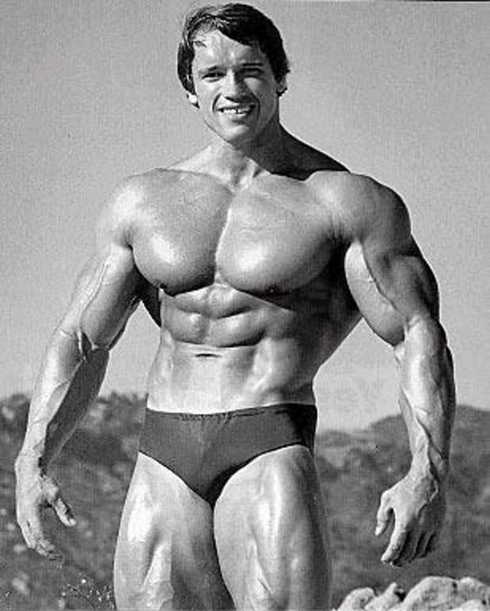
As awesome as Arnold is, which of these two individuals do you think would win in a fight?
And that's how we arrive at exercises such as the plank, side-plank, and deadbug instead. By squeezing the core to resist movement rather than to initiate it, we train the core muscles for their proper, evolutionary purpose.
Yes, I know that this philosophy would clash with that of many others, but if you're a physique athlete, then by all means, do what you need to do to get those chiselled abs. From a health, or even medical standpoint, however, sit-ups have no functional purpose and are more debilitating than beneficial - especially with the amount of time we spend in flexed, sitting positions in modern life.
Mobility
is a common factor cited and addressed in physical rehab by athletic
therapists, physiotherapists, chiropractors, and the like. Like always,
however, 'mobility' didn't become a mainstream word until personal
trainers and other fitness professionals started throwing it around, and
today it's the current hot-word that everyone uses to sound smart and
grab attention. There are misconceptions about what mobility actually
is, however, and the proper ways to address it.
So what
is mobility? A lot of people use it interchangeably with "flexibility",
which is understandable but incorrect. Mobility refers to the range of
motion at a joint itself. For example, flexion at the shoulder joint
(lifting your arm up in front) to reach over head is a range of motion.
When we speak of flexibility, we are only talking about the muscles of
the joint being able to lengthen and stretch. While flexibility contributes to mobility, the stiffness of a muscle is not the only factor that can affect a joint's range.
Mobility Is More Than One Factor
The joint itself has several
structures that can cause limitations. Fascia covers all muscles, and
while it's often considered to be part of the muscle itself, it exists
as its own separate structure. There's the joint capsule, which is
ligament-like bands that encompass the joint, and ligaments themselves
that support the area. There are bursae, fluid-filled sacs that buffer
impact and friction, which can become inflamed and limit range of
motion. There's cartilage and the bone surfaces themselves, which can
hinder mobility if there's damage or degeneration. (ie: meniscus tears
or arthritis) Synovial fluid, which lubricates a joint, can increase or
decrease based on joint health. Bone surfaces can also be incongruent
and may be sitting improperly on one-another. (ie: a "stuck" rib) With
all that in mind, mobility is a multi-faceted picture, and when you're
trying to increase it, you're addressing all of these physical factors,
not just the flexibility of the muscle.
If it was as simple as "the arm bone is connected to the hand bone", then we could just publish a "For Dummies" manual.
Now,
one problem that I run into a lot is that people think that they need
to aggressively mobilize every joint in their body in order to attain
proper or optimal function. The fitness industry is starting to become
bad with this, and even personal trainers are often over their heads
when attempting to prescribe mobility exercises. This is where injury,
of course, follows suit. If someone is new to exercise and can't fully
flex their arms overhead, should we really be getting them into
aggressive dowel-circles with the goal of having them overhead squat? Of
course not! Those shoulders are unstable!
A Cyclic Relationship
Here's the word that should
have accompanied "mobility" as it's partner-in-crime hot-word:
Stability. Stability and mobility are directly paired, and one cannot
exist without the other. In fact, in the absence or loss of one, the
other will typically decrease as well. This isn't the body rubbing salt
in a wound, however. In fact, when mobility decreases in response to
poor-stability, this is the body creating a protective response.
Every
joint in the body needs to have a certain degree of muscular stability
in order to properly protect the area and prevent injury to structures.
However, when stability is lacking, such as when spinal stability is
lost due to inactivity and a weak core, the human body has a fantastic
compensation method in order to ensure that injury and pathology can
still be minimized. Hypomobility is the result. Muscular structures will
increase in tension and become tighter, joint capsules become
restricted, fascia will be adhesed and glued, and synovial fluid
production can drop. Think of it as a loose hinge on a machine that's
too stripped to repair, and so it's welded tight instead. Less movement
can occur, but the structural integrity is spared.
Never compromise your integrity!
With this in mind, it should hopefully be easy to understand why aggressive mobilizing can result in injury. If the shoulder's stabilizing muscles
are weak, then drastically increasing mobility is just going to cause a
person to move their arms into a position that your muscles can't
support, and damage will ensue.
Two types of practitioners that I often see falling into this trap are
chiropractors and yogis (without trying to say that neither field has
its place). Chiropractors, specifically those who are treatment-based
only and favour the "crack" or other quick and aggressive techniques,
definitely do the job that they're paid for by releasing a joint.
However, by not taking the time to correct for the instability of the
joint - the reason for why the joint became hypomobile in the first
place - it sets up for the return of that client quite often once the
body finishes responding to the instability by restricting the area
again. On the other side of the professional field, yogis tend to do the
same thing, albeit in a more conservative way. True, they do a lot of
isometric bodyweight strengthening, but many individuals will not find
pain-relief from the activity. When the main focus is elongating the
body's muscles and maximizing range of motion and flexibility,
complementary weight-training is very often a necessity in order to
stabilize the body in order to compensate.
The Solution
The
solution is clear. Stop being so aggressive when mobilizing clients! It
doesn't matter if you're a physiotherapist, personal trainer, or witch
doctor. We all need to stop removing a base of joint support without
offering anything to replace it. My philosophy is as follows:
In educated practice, mobilization is done slowly and gradually.
Ideally, it should never be the goal to try and entirely mobilize a
severely restricted joint in one session.
In clinical practice, joint glides and muscle energy techniques are supplemented with gentle self-mobilization homework and stabilization exercises. Even massage is best when paired with exercise.
Ie: For the back, a gentle mob, a cat-camel mobilization exercise,
and some core strengthening will likely show much better efficacy than a
quick crack.
Mobilization should never hurt save for the Grade 5 (the
crack) and even that's debatable. Whether the client is receiving a
mobilization technique or doing a mobilization exercise, a look of
excruciation on their face is a definite sign to stop.
Above all, if you're recommending mobilization to someone, know what
you're doing! Be specific in your aims and know the limitations of your
client (and you're insurance coverage). If you're throwing darts and
hoping that stressing an end-range repeatedly is going to result in good
health, your client is in for a nasty surprise, sooner or later.
We'll likely to continue to see mistakes
concerning mobility for years to come until a new trend hits the fitness
media and takes over. Until then, education is important. In failure of
that, I could just start hanging out at Crossfit gyms and hand out
business cards.