Wednesday, 29 June 2016

I Asked A Physiotherapist How She And I Compare

Athletic Therapists are consistently compared to Physiotherapists, and we're constantly asked to describe the differences between us. I won't lie; I see a problem with asking one person alone to describe the gap. An AT will likely come off as prickly to try and measure up to the PT. A PT might view us as inexperienced clinicians of a young profession. So, in that case, I took the diplomatic approach and interviewed my friend Lisette, a Physiotherapist in Vancouver. Between an AT and PT, we broke it down.


-------------------------------

Me: Athletic Therapy is officially defined by Canadian Athletic Therapist's Association as follows:

"Certified Athletic Therapists are best known for their quick-thinking on-field emergency care of professional and elite athletes. The first to respond when someone gets hurt, they are experts at injury assessment and rehabilitation. It’s that same mix of on-site care and active rehabilitation skills that makes Athletic Therapists so effective in treating the musculoskeletal (muscles, bones, and joints) injuries of all Canadians, whether on the field or in the clinic.

Athletic therapists adhere to the Sports Medicine Model of care. They treat a wide range of patients, from kids with concussions to seniors recovering from hip replacement surgery, using various manual therapies, modalities, exercise prescription and even bracing and taping. The treatment varies but the objective doesn’t: an Athletic Therapist's goal is to help clients return to their usual activities, whether that means playing competitive sports or walking to the mailbox and back.

The five practice domains are as follows:
  1. Prevention
  2. Assessment
  3. Intervention
  4. Practice Management
  5. Professional Responsibility"

Can you please define your field of physiotherapy for me?


Lisette: To put it simply, Physiotherapy is a healthcare profession dedicated to working with people to identify and maximize their ability to move and function throughout their lifespan.

From our association websites, PABC and CPA, you can find more information:

http://physiotherapy.ca/getmedia/e3f53048-d8e0-416b-9c9d-38277c0e6643/DoPEN(final).pdf.aspx


Me: The education process for Athletic Therapy is to complete a four-year Bachelor's Degree in Athletic Therapy (at which there are seven schools in Canada), which consists of extensive practical and hands-on instruction. We are then required to complete 1200 hours of practicum, and then attempt the national board exam to finally certify.

Could you  tell me about the education process of Physiotherapy? Please mention if there's any comparisons or contrasts you'd like to make.


Lisette: The education process within Canada is to complete a 2-year Masters degree in Physical Therapy, with most schools requiring slightly different admission criteria on top of an undergraduate degree. While it varies from school to school, most are looking at GPA of the last 2 years of your undergraduate degree that are 300- and 400- level courses, prerequisite courses, volunteer hours and professional references. Most have the McMaster University adapted “MMI”, or Multiple Mini Interview format, similar to that of medical school. The programs consist of theoretical and clinical components and we have separate national board written and clinical exams to pass in order to fully practice with no restrictions.

When it comes down to it, can you describe the differences between the two fields, firstly in the specific scope of practice, and secondly in terms of experience and focus of work.


Lisette: It is actually quite difficult to describe the differences between the two fields, at least from my perspective. The scope of physiotherapy is quite broad and encompasses several different and varied practice areas. I think the biggest overlap of a PT and an ATs scope of practice is with sport and orthopaedics, which a large portion of PTs work in, sometimes within the same clinics as ATs. As from our association website, physiotherapists are employed in multiple settings, not just in private clinics that many people are accustomed to:

Arthritis
Asthma
Back pain
Cancer
Cardiovascular Conditions (including post heart attack, 
Chronic Obstructive Pulmonary Disease (COPD), and pneumonia)
Cerebral palsy
Chronic Pain
Concussions
Critical Care
Dementia
Developmental Delay & An Array of Paediatric Conditions
Diabetes
Falls & Fractures
High Blood Pressure
Incontinence
Multiple Sclerosis
Neck Pain
Neurological Conditions (stroke, concussions, spinal injury, Parkinson’s disease),
Occupational Health
Oncology-Related Conditions (including lymphedema)
Osteoporosis
Pregnancy-related Incontinence
Rehabilitation
Vestibular Disorders (dizziness)

Just to name a few. :)

Taken from CPAs website, our scope of practice is as follows: The ‘foundation practice acts’ are in all provincial legislations and include assessment of neuro-musculoskeletal and cardio
respiratory systems, therapeutic exercise, electrotherapy, hydrotherapy, soft tissue techniques, manual therapy, wound management, and tracheal suctioning. The knowledge and skills required to perform these acts are taught in the entry-level physiotherapy curricula in all Canadian university programs and are included in the blueprint for the Physiotherapy Competency
Examination administered by the Canadian Alliance of Physiotherapy Regulators.
Other acts, such as spinal manipulation or dry needling (acupuncture) are within the profession’s authorized scope of practice but are not considered entry-level. They require additional education and training following graduation.


Me: Definitely, a physiotherapist’s scope of practice extends across a much more broad range than an AT’s, but as you said, there is a lot of overlap in our skillset when it comes to orthopedics, musculoskeletal rehab, and sport. If I were to just pull from your same list, my list would, of course, be shorter, but still encompass quite a range itself.

Arthritis
Back pain
Chronic Pain
Concussions
Critical Care
Falls & Fractures
Neck Pain
Neurological Conditions (stroke, concussions, spinal injury, Parkinson’s disease)
Occupational Health
Rehabilitation

We also have the addition of being the on-field specialists, as you said. On sports fields - and in labour fields and factories as well, in fact - we are trained professionals in quick on-site assessments, shorter-term injury care, and first responders in the events of emergency.

As well, if I dare to make a slight side-step, many AT’s receive full training as Exercise Physiologists as well. While we’re not all necessarily certified as such, and while the exact scope of our skills are different, we are known to be adept with chronic diseases such as high blood pressure, diabetes, and osteoporosis ourselves.

Also like a PT, ATs will further-specialize in specific sub-fields; simply within a smaller pool, but no-less skilled in them. We do have a wide-array of entry-level skills and techniques, but, like I’m sure is the case for you as well, the continued-education is endless if we so choose.

Can you provide an example or two of a type of client or situation that you would refer away to an AT?


As a physio, I firmly believe in client-centred care. To me, that means if a patient is better-served by a different practitioner, whether it be within the same profession or not, that is the most important thing. As I mentioned previously, I think that the scope of an AT falls within that of a physical therapist’s. From what I understand, the majority of an AT’s focus in school is sport and rehabilitation, as well as on-field assessment. When we graduate from physio school, we are entry-level PTs that are considered generalists. I would say that the majority of my classmates have gone on to orthopaedics, and some have started to specialize in sport rehabilitation. I think this is where the lines get quite blurry, because of the overlap in scope. I don’t think one or the other would be better or worse for a patient to be treated by, just as within the domain of physio there are different treatment styles, techniques and theories which seem to have all had success and have better success with some patients than others. Let’s put it this way: if I have a patient who is a basketball player and after trying some things, the patient did not seem to improve, I would consider referring him to either another PT that I knew could potentially be more successful, or another rehabilitation expert, such as an AT.

I often feel like, as an AT, I’m almost akin to a physio that fast-tracked a speciality. While I don’t receive any training when it comes to MS, cerebral palsy, or cancer, I graduated school with speciality-level skills in the orthopedic field immediately. I think a lot of people view us as less competent due to our fewer years of education than a Physio or Chiro, but it’s important to remember that there’s a tradeoff. Fewer years with a narrower, but more specialized scope of practice versus a longer program with a broader, but more general knowledge-base.


That isn’t to say that that, by default, makes me more qualified than a Physiotherapist when it comes to musculoskeletal conditions. If I know of a Physio with more experience with certain types of injuries than myself and I think that my client is better off with them, then of course, they’re referred on. On that note, while AT’s can safely treat orthopedic conditions of clients who also have other chronic diseases (MS, cancer, etc.), if those diseases are complicated to the point that they would start directly affecting my treatment process, then there isn’t a question of if I send them on or not.

-------------------------------

A quick interview for sure, but thanks so much, Lisette, for answering my questions. I hope that this sheds some light on the comparisons and contrasts between these two professions. My goal is to see Athletic Therapy as a well-known and widespread option available to everyone in the coming years. It helps if I can show people that we're more than just soccer team-tapers or a baby-profession that hasn't found its legs yet. At the same time, we're not here to replace Physiotherapists or discredit the amazing work that they do.

If nothing else, I also hope that this post triggers questions to be asked of Athletic Therapists. If you have one, please do not hesitate with it.

Tuesday, 21 June 2016

When Does Training Become (And Stop Being) Functional?

Functional training. Try defining it in your own words.

In my words, functional training is exercise that is specifically tailored towards replicating and optimising movement patterns. These movement patterns should be those that an individual uses on a daily basis or must use in the foreseeable future.

We typically think of two ends of the spectrum when it comes to training. The traditional and isolated end and the functional end.


The isolated training end is what most people picture when thinking about working out at the gym. Bicep curls and knee extensions, as well as the more compound movements such as squats and deadlifts. Whether you're training for size, performance, or rehabilitation, these types of exercises are vital to the process. Without targeting and isolating a single muscle or select group at a time, an individual's strength and progress will eventually plateau. However, the usefulness of isolated training will eventually run out as a person graduates towards needing a program that's more tailored for their specific performance goals. If we use the example of a baseball player who needs to be able to generate high-power for pitching, bicep curls and tricep dips will cease being useful after a certain point. Sure, the bodybuilder workout will help an athlete or a tradesman to gain size, but when it comes to needing to coordinate those strength benefits into specific, useful tasks, the transfer has its limits.

In contrast, we have the functional training end of that spectrum. This is when the exercises we do become more specific to the activities required of us at optimal capacity once we leave the gym. Athletes will need to eventually move to this side of things in their later off-season and rehab will consist of a lot of this in order to regain daily function. Even the average gym-goer should be working this type of training in to maintain their daily ability as they become stronger. If we speak in black-and-white terms, this type of training may consists of overhead pressing or carrying a load to simulate work, box jumps to train our muscular systems for sprinting, or rotational movements to teach core stability while swinging a baseball bat.

And that's where the thought process tends to stop. However, we often see an additional far-end of the spectrum when we're at the gym. For the purposes of this post, let's call it "complex movement"; although some of the more opinionated professionals may have less-polite names for it.


When we see people moving into this category, they'll almost always continue to call it "functional training". They're using a high number of multiple muscle groups to target balance and power in multiple planes of motion. The problem here is that, often, these people have now surpassed the realms of functional. That is, unless the individual is a Cirque de Soleil performer.


Gym-goers very often get carried away and assume that the more complicated an exercise is, the more functional it is for our daily ability. It's harder, so by default it must be better. There's a certain capacity in which that logic holds true, but it breaks down quite quickly once we add more and more complexity to the movements.

I once saw Stuart McGill, one of (if not the) world's leading experts on spinal health and rehabilitation put on a seminar. I had the eye-popping experience watching him, with his booming voice and towering demeanour, border on becoming angry at a physiotherapist in his audience; she had argued for the usefulness of standing clients on top of BOSU Balls.


"Tell me," he said, "how having a client balance on a BOSU would be productive to their recovery." No one could come up with a scientific answer. In his opinion, when we're trying to train a person's core to support the spine, removing their base of support beneath their feet is counterproductive.

To make the point more clear, when we talk about "daily function", are we normally required to balance on top of rounded surfaces while pressing weights? Do we usually need to stand ourselves on our hands? Should I hold a static pistol squat while passing a medicine ball back and forth with a partner? If you checked no to all of the above, then proceed with the essay question of: Then why are we training ourselves to do those things?

Inherently, these complex exercises are not damaging to an individual so long as they have been conditioned enough to do them safely. However, when we're selling people on the "functionality" of these exercises, whether it's being sold by a trainer, an athletic therapist, or a physio, we need to be careful of trading productivity for glamour. If there's a specific goal of exercise, then overdoing it with complex movements becomes more of a waste of time that simply looks cooler to do than is useful. If you need to train your balance, then external perturbations rather than unstable surfaces are what will more accurately simulate their needs. And if the shoulders need to be exceptionally stable, it's more likely for the purposes of open-chain movements such as throwing and climbing, rather than weight-bearing.

To sum up, more does not mean better. Isolation has it's necessary purpose, functionality has defined borders, and over-complicating movement does not equal health. As one of my brilliant college professors once stated, follow the KISS Principle.

Keep
It
Simple,
Stupid!

Tuesday, 14 June 2016

Foam Roller Syndrome

Foam roller syndrome. Don't Google it, I made the term up. It's basically the name I give to chronic, self-(mis)treated instability. Here's why...

Foam rollers, lacrosse balls, tennis balls, Tiger Tails - they're all great tools. Without a doubt, self-massage and myofascial release are incredibly useful for working out tension and restrictions in the body. When you have pain and soreness from either injury or exercise, the aid to get through the recovery process is invaluable.


However (there is always a "however"), like most things that pop up in the health and fitness industry, self-myofascial release is being treated as another magic bullet. Foam roll your back before every workout. Dig the lacrosse ball into your shoulder blade to improve your range. Massage your calves out every night to prevent injury. Familiar, right?

Here's the question, though. Is chronic use of these tools necessary? Should the typical individual, whether they're an athlete, gym rat, or average Joe, feel the need to work through their erectors routinely in order to remain comfortable?

My answer is: probably not. To explain, let me just point out that pain and tension are not a dysfunction. They are symptoms. They are indicative OF a dysfunction. A muscle being tight and sore is, itself, not the problem. It is tight and sore because of its need to compensate for the postural or mechanical faults that are occurring elsewhere in the body.

Let's use the most common example of back pain. Again and again, I see people on the foam roller for 15 minutes every day to work through the tension in their erectors. The excuse is that they're stressed, or were on their feet all day, or that the way they workout requires it. Sure, maybe these factors are exacerbating the condition, but why not ask why the condition is there in the first place? Is there instability that causes stress-triggered spasm? Does the improper weight-bearing position of your hips make you unable to stand for long periods? Are your muscles firing in an improper pattern while you lift weights?

Foam rolling dependence highlights a neglect on the mechanical errors that cause us these types of dysfunctions. Like biweekly trips to the chiropractor or daily painkiller medications, relying on self-massage is just another way of covering up the symptoms while not actually coming to a long-term solution. Rolling still has its place, especially when dealing with acute injury or exertional stress, but myofascial release belongs side-by-side with a program to retrain and educate the body's function. While strengthening the core, then of course, you should roll the back to fasciliate the adjustment toward proper movement patterns, and as the dysfunction is trained away, then the need for the foam roller should as well. If you've noticed yourself needing to use it chronically, then it's probably time to reevaluate what you're doing.

You can bail the boat all day, but you're still sinking until you patch the hole.


Thursday, 9 June 2016

Core Before, Not Abs After

I'll go ahead and assume that anyone reading knows (or at least has heard or read about me ranting) about the importance of core stability for a healthy back. With that in mind, let's quickly discuss one common gym habit.

The gym rats among you may be familiar with the trend of rocking out a few sets of ab work at the end of your workout, tacked on along with the other muscle group you trained that day. (No one ever solely just does a core day, do they?) Like I've mentioned before, if you're going for that six-pack, aesthetic look, then this can be a good idea. Save the painful, stomach-cramping exercises for last so you're not exhausting yourself for the heavy lifts too early. Makes sense, right?

However, from a core stability and spinal health standpoint, and even from a performance one for that matter, stop and rethink your routine. If we're doing core as part of our routine for these purposes, then why are we saving it for the end? These types of exercises have the purpose of making the body stronger by assisting with large movements, so it stands to reason that if we stick them at the front of our workout regiment, then we'll have strong lifts.


In that video, I demonstrate the importance of core activation when it comes to limb movement. When the core is inactive, it's relatively easy to overpower the individual's hip flexion. But when I have him brace his core by breathing into his diaphragm, his hip strength increase exponentially. This essentially demonstrates the power of the val salva maneuver, which has the function of maximizing core stability. When our core is stronger and more active, we capitalize on that effect.

With this logic, it should start to make sense why I recommend doing your core routine as a warm up. By activating these muscles early on, we're increasing the strength we have when we lift heavy and prolong our time before we exhaust and let our form fall apart. With stability exercises, you don't need to worry about pre-fatigue, since unlike traditional ab exercises, core stability does not train your muscles to exhaustion and breakdown. With that being said, I challenge you to try a few sets of deadbugs before you squat next time and feel for the difference. Sans the lifting belt.


Wednesday, 18 May 2016

The Shin Splints Troubleshooter

Shin splints suck. When they come on, it's so difficult to get away from them. It's no broken arm, but when they get bad, it's that kind of aching pain that just makes basic function agonizing, like a cavity.

"Shin splints" is considered to be a catch-all term that encompasses injuries such as muscle tears and stress fractures. However, in my practice, I stick to calling those things "muscle tears and stress fractures". As far as I'm concerned, shin splints (or medial tibial stress syndrome) involves tightness and restriction of the calf muscles muscles to the point that they pull strongly enough on the tibia (shin bone) to cause inflammation. This effect occurs when the outermost layer that covers the bone - the periosteum - is lifted up due to this tension, allowing the inflammation to develop underneath. Oftentimes, there are microtears throughout the calf muscles involves as well as pain referred through the entire medial calf. Sounds awful, huh?

Here's where I start to get more general and provide a list of the go-to-reasons why you may have MTSS and what you can do about it. Keep in mind, this training advice, not medical. If you have a real problem, seek help from a medical professional in person.

1) You're a Heel Runner

If, when you run, you strike the ground heavily with your heel, the hard impact could be a likely trigger for the inflammation beneath your periosteum if you've already been prone to it. The strike of the heel allows all the force to travel directly up your leg, causing impact-related problems all the way up to the back. Retraining of your running gait, switching to a softer running surface, or wearing a flatter running shoe that promotes more midfoot running are excellent places to start for your recovery.


2) You're a Pronator and/or Flat-Footed

If your feet have very little natural arch of if you have an exaggerated inward-roll of your feet while walking and running, this could be putting excessive strain through the medial calf muscle. Often, improper shoe support is the cause, and you may need more added to support the arch and stop the pronation. You may also need less as well. I, myself, self-corrected once I switched to minimalist shoes and no longer had an artificial arch causing my foot to roll in. Foot exercises can also help to lift the arch in your foot naturally as well, to an extent.


3) Your Butt is Asleep

If your glutes are inactive during gait (they should be the primary muscle moving you along), then the hamstrings and calves tend to take over. If you're getting your calves to take on the workload that your much stronger gluteal muscles should normally be handling, then you'll definitely see tightness and restriction through the muscles occur as a result.

4) You're Doing Calf Raises

Firstly, I hope that no one save for bodybuilding and fitness competitors are doing calf raises. Your calves were designed to run for hours, not lifting a heavy weight ten times. So that's your first problem

Secondly, most-often when someone does a calf raises, they are pronating and favouring the medial calf overall, causing it to become more stronger - and tighter - than the outer as a result. If you really have to do calf raises, try squeezing a tennis ball between your heels to help distribute the load.


5) You're Stretching Improperly

If you're stretching your calves to try to relieve your pain but are getting no results, recheck your technique. If you're doing the traditional runners stretch by lunging against a wall, pushing your toes up against the wall, or dropping your heel off a step, you may very well be moving into pronation again. Try doing the runner's lunger, but with the foot flat on an incline to keep the leg and foot properly aligned.


Furthermore, are you stretching your entire calf? When stretching, you need to do both a straight-legged stretch for the more superficial gastrocnemius muscle (which crosses the knee) and one with a slightly bent knee to get the deeper soleus which crosses the  ankle only.

6) You're Not "Born to Run"

Finally, maybe you just have anatomy against you. I don't care what some people say; we're not all naturally built to run long distances. Yes, we all did it when we were cavemen, but do you really think that our anatomy hasn't at all changed since cro magnons walked the earth? If you're naturally (or unnaturally) heavy-set and have short legs relative to your weight and height, it may just be too much for your legs to handle running a marathon without extensive and specific training. I'll never say that there's a physical feat that anyone can't accomplish, but without a doubt, it's going to be a much harder time for some than others.

Take from this what you will. Everyone's body is different though, so the reason for your pain may very well not have been mentioned. Use it as a starting point. It may take trial and error, but no one is meant to suffer without a solution.

Friday, 13 May 2016

Rotator Stuff and Other Things You Neglect

I posted before about a shoulder case study and some details about stability of the joint before, but here's some more day-to-day gym rat stuff for you all to chew on.

I work at what's known as the body-building gym of my town. Wherever you have heavy lifters, you have people with shoulder injuries, and thus there are the few of those trying to do what they can to take care of their shoulder health. There's a lot of common error when I look at lifters getting their shoulders warmed up, though, so here I am science-ing them to correction.

Firstly, let's talk about the rotator cuff. These four muscles are constantly being bogged down by injury, whether it's tendinosis, muscle tears, or impingement. The first error I run into are the people who think that simply keeping your rotators strong is the key to good shoulder health. However, most of the time when we have chronic shoulder injuries, it is not usually due to the rotator cuff being weak. In fact, even if the rotator cuff has an overuse injury itself, it is almost always as a result of weakness elsewhere around the shoulder girdle which is forcing the rotator muscles to overcompensate or causing other structures to restrict it. Most of the time, shoulder rehab programs are going to require more scapular strengthening, using muscles such as the serratus anterior in order to stabilize the shoulder blade and relieve the workload of the rotators. Here's one fairly basic warm-up exercise you can use to hit the proper muscle groups.


For something a bit more complex as you get stronger, I'll refer to one of the most well-known "shoulder guys", Eric Cressey.


Does this mean we should ignore the rotator cuff group in that case? Nope. They still need to remain strong enough for day-to-day work, especially if you're working overhead a lot. (Throwers and painters alike.) As well, if you're a traditional weightlifter who isolates your movements a lot, you still need to make up for the lack of use your rotator cuffs are getting while you do lifts such as bench or machine press. Bringing it back to Cressey, he recommends four days per week  for his baseball throwers, while the average Joe will benefit from even 1-2 times per week for three sets.

So now that we've determined that you do still get to do rotator exercises, how do we do them? Firstly, here's what not to do. The most common incorrect method I see is the standing dumbbell variation...

So wrong that it hurts. Probably her more than me though.

The problem here is that if you think about the angle of gravity with this exercise, this doesn't hit your rotators at all. With the downward pull at your shoulder from gravity, the only muscles that are actually working are your deltoids and traps. A line of pull to give resistance to the rotational movement is absent. If you're going to use dumbbells to hit the correct muscle group, you're going to have to lay down on a bench, first on your back and then on your side to hit the internal and external rotators, respectively. Standing with your arms at 90 degrees for external rotation works as well, but you'll still need to reposition to the bench for the internals.

The easier solution for your exercise is to use either a band or cable with a horizontal line of pull. I'll make one tweak to usual way of doing it, however. While performing your internal and external rotation, squeeze a towel between your elbow and body. The first reason for this is that it puts your shoulder girdle into "scapular plane", which is essentially the angle that will be the most stable and ideal for the shoulder to be moving in. Secondly, having the towel to hold on to ensures that you don't make the common cheat and allow the arm to lift away from the body, again creating compensation using your delts.


To conclude, if you want to keep your shoulders strong and stable in the gym, exercise the rotators using a band and don't neglect your scapular muscles in your upper back. Yes, we all want to get over to the bench press as quickly as possible, but proper prep before your workout will save you more time out of the rehab clinic later.

Thursday, 12 May 2016

Core Strength and Why Sit-Ups Will Hurt You

When I train clients or teach classes, people often question why I don’t employ the use of any traditional “ab” exercises - in other words, sit-ups, crunches, etc. Upon being asked why, my answer is blunt: Sit-ups are useless, if not harmful.

As a quick anatomy review, our core is a system of muscles that work together for the purpose of “anti-movement” in order to stabilize and protect the spine from damaging forces. If you don’t know, your spine is made up of numerous bony bits surrounding an extremely sensitive softer bit that acts as the closest thing you can identify as the root of all pain.


Demons and Pagan demi-gods notwithstanding.

That being considered, it's in our best interest to condition our core in the most optimal way to do the job of protecting the spine. And the best way to do that is to train using this "anti-movement" that I mentioned. What is anti-movement? It's exactly what it sounds like. It's the contraction of the muscles of your core in order to resist movements and stimuli that could result in injury. For instance:

  • Activation of the muscles in order to support the spine while in an upright position to decrease the amount of prolonged (and stressful) load going through the joints
  • Resistance against trauma that may cause the spine to move through a damaging range of motion (such as a football linebacker tackling you and risking hyperextension of your spine)

Which brings us back to the exercise. Why are we doing sit-ups to train our abs? Sure, some may argue that it's the concentric/eccentric contraction that promotes the most muscle growth to define the abdominals for aesthetic reasons, but at the same time, we're forcing our spine through loaded flexion which is the biggest predisposer to disc herniations. By way of this type of training, we end up not conditioning our core muscles at all to be able to support the spinal column, resulting in numerous back injuries.

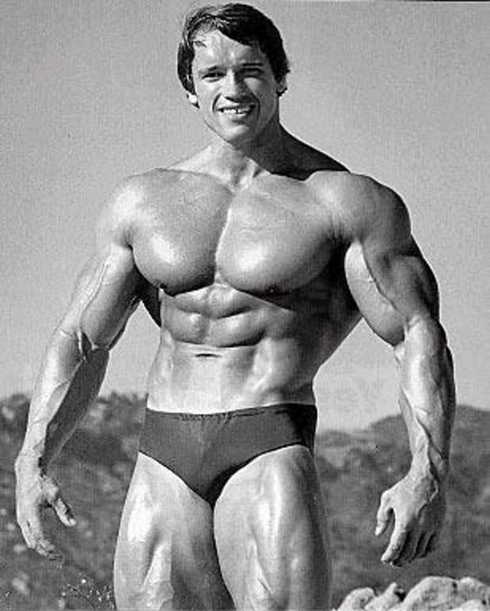
Taking a step back to what I said above, true, sit-ups may be the better exercise for the heavily-defined 6-pack that you want for summer. However, it's important to weigh the benefits of function and aesthetics. As an example, if you look at your typical MMA fighter, a type of athlete who needs to be in the peak physical condition to out-perform the opposition, the abdominal area has a completely different appearance than, for instance, a body builder, who has the look we come to expect from television and magazines. 

As awesome as Arnold is, which of these two individuals do you think would win in a fight?

And that's how we arrive at exercises such as the plank, side-plank, and deadbug instead. By squeezing the core to resist movement rather than to initiate it, we train the core muscles for their proper, evolutionary purpose. 

Yes, I know that this philosophy would clash with that of many others, but if you're a physique athlete, then by all means, do what you need to do to get those chiselled abs. From a health, or even medical standpoint, however, sit-ups have no functional purpose and are more debilitating than beneficial - especially with the amount of time we spend in flexed, sitting positions in modern life.

So, for the sake of your back health, plank away.

...Ladies?