Tuesday, 27 November 2018

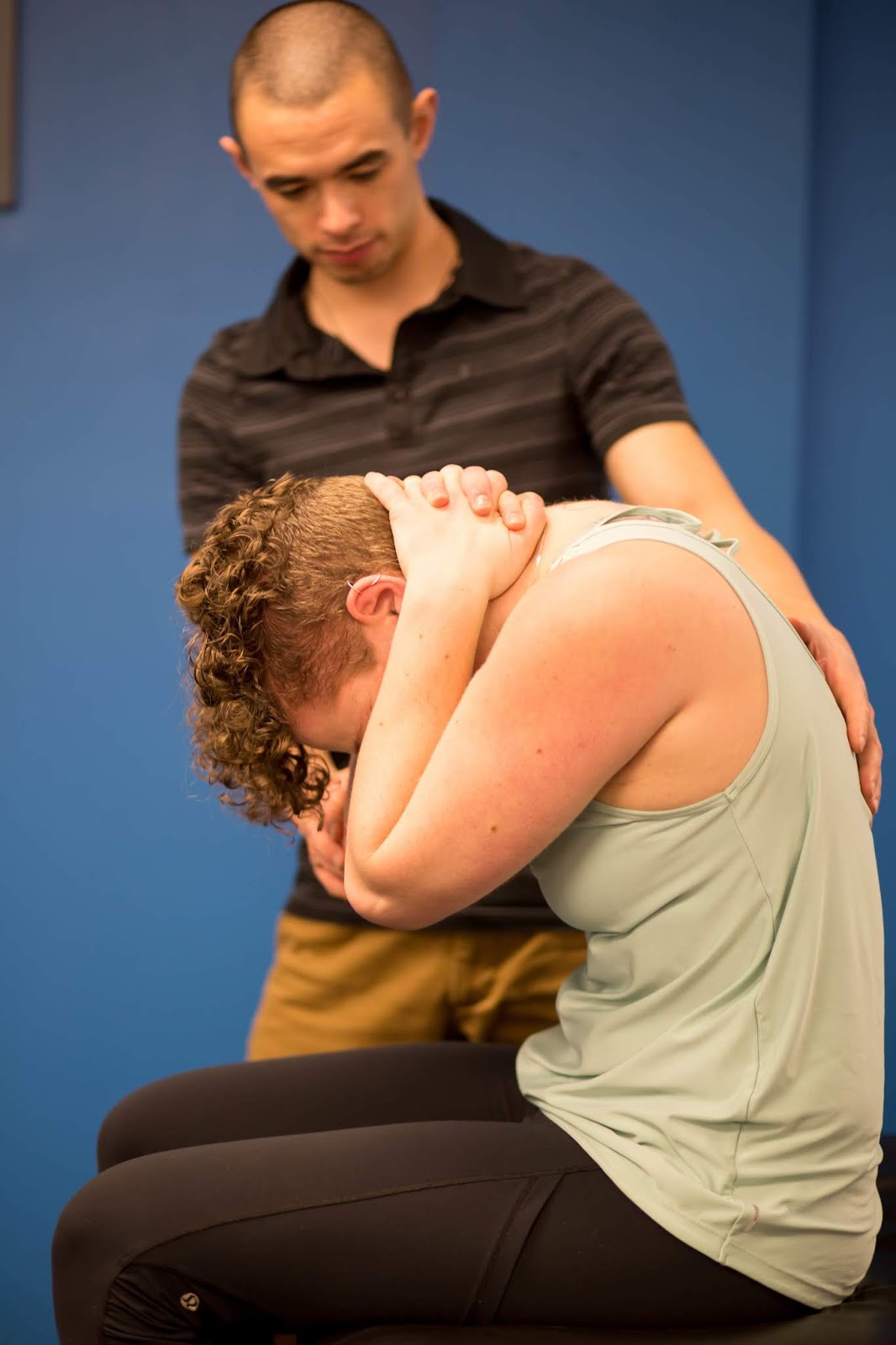
5 Neck and Shoulder Things

I'm often asked what the most common injury that I get in my practice is. As it turns out, I'm a shoulder and neck guy. A large part of my practice involves treating body builders, rock climbers, trades workers, hairstylists, and elderly who experience pain in this area.

(Funny enough, I always thought that I'd be a knee-guy while in college, due to my running background. What's more, the shoulder was the most difficult joint to get my head around in school. I guess studying actually pays off?)

Go figure.
The neck and shoulder are closely related, with dysfunction or symptoms in one often causing symptoms in the other. With that being said, here are some go-to thoughts regarding the health of these joints.

Your Posture Probably Isn't The Problem

I speak a lot on the fact that there is poor correlation between bad posture and future incidents of pain. There are too many individuals out there walking with forward heads and shoulders but no discomfort and vice versa.

Instead, we've linked lack of variety in posture closer to pain. Good or bad, spending too much time in a single position is not what the body craves, and this often is the route to muscular tension and discomfort. This is why it's recommended to take regular movement breaks while at work. It doesn't take much.

Stretching Does Not Make Unstable Joints Happy

Thank goodness, the fitness industry seems to be tapering off a bit from the whole mobility craze that it went through. But I digress, I still see numerous individuals trying to stretch and traction their shoulders to proper health.


No, I'm not saying that joint mobility isn't important. But fairly enough, we went through a bit of an epidemic of fitness buffs non-specifically stretching their joints to the point of laxity with bands. Shoulders often hurt because they're, in simple terms, too loose. And stretching something in this condition will not improve the situation.

Warm Up, But Not Just Your Rotator Cuffs

So we turn to strengthening and warming up. Many individuals think that the rotator cuff muscles are the end-all for shoulder health. After all, their function is to stabilize the head of the humerus (the ball) in the socket.

However, what we don't always realize is that rotator cuff muscles are often simply overworked. Proper strength to control the movement of the shoulder blade is vital to shoulder health, so warming up and exercising the ability to protract, retract, and glide the scapula is key.


Your Upper Traps Are Not Your Only Traps

The upper traps seem to be the bane of many people's existence. The stress tension collects there, they take over other muscles' jobs, and the pain can be excruciating. And stretching often doesn't seem to have an effect.

Well, we know that muscle tightness is neurological. Sometimes, a muscle will present as tight because its opposing muscle is weak. The lower traps oppose the upper in part of their function, with the middle traps assisting the two. I frequently find these middle and lower traps weak in clients who complain of upper shoulder tightness, and so this is an important area to keep in mind.


Keep That Neck Strong

The muscles at the front of your neck are important for maintaining stability and control of that area of the spine. These are also one of the muscle groups that commonly become weak throughout our sedentary lifestyles.

I had to insert this somewhere.
Drawing your chin in like a drawer (or the double chin position) contracts those deep neck flexors at the front. Having these guys strong will prevent the neck muscles in the back or others from the shoulder from tensing up to try and create that stability on their own.


Subscribe

Do you like the content that you're reading? Sign up to receive the weekly blog update from Cain Exercise Rehab directly to your email!

Click Here!

Book Now

In the Victoria area and interested in booking an appointment with Cain Exercise Rehab? Follow the link below to book online!

Click Here!

Tuesday, 20 November 2018

The Memory Of Pain

Remember that time, years ago, when you hurt your back while bending over?

Well, your back remembers it too.

You may have heard of the term "muscle memory" in the past. It's a loose term defining the body's ability to remember past motor patterns, often triggered subconsciously as soon as the right environment presents itself. For instance, someone may not have ridden  bike in 30 years, but as soon as they feel the seat, pedals, and handlebar, all the balance and coordination comes rushing back to them and off they go.


Now imagine if, instead of that feeling of the bike seat and pedals, the trigger you felt was bending forward. And instead of the ability to ride the bike, the signal that your brain digs out of storage is pain.

This is one of our BIG contributors to chronic pain. Very often, our past experiences of what caused pain in the first place, no matter how long ago, can amplify pain we feel in the future as a conditioned response. In the same way that Pavlov trained dogs to salivate at the ring of a bell, regardless of food actually being present, the nervous system can be trained to pump out pain signals, regardless of an appropriate trigger.


This concept is closely integrated with the one showing expectations of pain causing increased pain. In this example, your back is conditioned to have an exaggerated guarding response to bending forward. What's more, this bad habit is further encouraged by the fact that you've explicitly been avoiding flexion, essentially confirming your nervous system's irrational fear of the movement.


Hopefully, this helps to create an understanding of why pain can be persistent long after tissue has healed and appropriate triggers are no longer present. There are definitely subconscious and conscious factors at play here. (Along with the physical side, which, I'm not ignoring. Don't worry!)

With this being said, this is the reason why a lot of the rehab that I do with clients doesn't necessarily involve strengthening, but instead reteaching and reassuring them of movement and ranges that has been, inappropriately, acting as triggers. This goes for active and nonactive populations as well; it's incredible how many gym rats I need to teach how to round their backs again.


Subscribe

Do you like the content that you're reading? Sign up to receive the weekly blog update from Cain Exercise Rehab directly to your email!

Click Here!

Book Now

In the Victoria area and interested in booking an appointment with Cain Exercise Rehab? Follow the link below to book online!

Click Here!

Tuesday, 6 November 2018

Does Weather Really Affect Pain?

We're into November and the weather is continuing to change. Rain, cold, fog and, depending on where you live (probably not Victoria), snow!


On that subject, there are those of you who might swear that you can predict the changes in weather based on the way your joints and muscles feel. "My elbow hurts; it's about to rain!" We've all heard those wives tales in the past. Is there any science that backs this phenomenon up, though?

My neck hurts! Either it's about to rain or Thor is coming!

Looking at what the research has ruled out first, there is very little support for any effects from weather on muscular pain. Low correlation between environmental changes and lower back pain has been found. Similarly, rheumatoid arthritis isn't shown to be reactive to climate conditions either.

On the other hand, there is some evidence that links temperature and pressure changes to migraines. The research needs to be expanded on to exactly narrow down the cause-and-effect, however. Let's also remember that very little is known about migraines in the first place, so we have very little knowledge of what multitude of factors could be at play here.

Osteoarthritis pain is one of the more-researched types of pain that is looked at in terms of weather. So far, there isn't a lot of evidence leaning toward one side or the other, but there are some studies suggesting that there may be a minor relationship between the climate and joint pain. Keep in mind that there are as many studies claiming the opposite as well, though.

My fingers predict a 72% chance of rain with a high of 10 degrees.

One limit of the research, too, is that they have been unable to factor in psychological contributions to pain. The belief of weather-changing effects on pain is one that has been so heavily ingrained into several cultures. As a result, there's potential that any physiological changes could be triggered purely by the intensity of those beliefs.

Surprisingly, though, there isn't even a great link between weather and fibromyalgia, which we know has major psychological contributions. In that circumstance, we might have expected this condition to be one of the most-affected by weather, but it seems to not be the case.

So what can we conclude from all of this? Well, as far as the scientific research shows, there's only minimal, if any, support for the effects of weather on nearly any type of pain. This could be a frustrating read for many of you, as we certainly all have friends or family that are able to predict weather changes with eerie accuracy, though. One explanation could simply be that individual variance between people could show a link in a very minority of cases, but the fact is that this link does not seem to exist across the board.

Subscribe

Do you like the content that you're reading? Sign up to receive the weekly blog update from Cain Exercise Rehab directly to your email!

Click Here!

Book Now

In the Victoria area and interested in booking an appointment with Cain Exercise Rehab? Follow the link below to book online!

Click Here!

Tuesday, 30 October 2018

The Lost Concept Of Fun

I've had clients ask me, "Should I start going to the gym?"

My answer: "Do you want to?"

If the answer is yes, and the person is truly going to enjoy the experience of working out, then I absolutely encourage them to do so. However, this isn't the case for a lot of people, and those ones will find traditional exercise grueling and punishing.

20 more laps and you just might have time to get some sleep before sunrise!

Strangely, "exercise" becomes a deliberate, demanding, and labourous feat for us as we grow up. It wasn't always like this, for every one of us, though. As children, we ran, jumped, climbed, and otherwise played to stay active and healthy. And no one had to instruct us to do so! (For the most part.) It wasn't exercise to us, back then; it was just fun.


This concept of fun is, unfortunately, lost to a lot of us during development, possibly in due part to physical education simply not taking a focus on the fun aspect of being active. When a game of tag becomes replaced by laps around the field, for instance, it's not so hard to understand why so many people have a negative emotional view on exercise.

For this reason, I'm not a proponent of someone "making" themselves work out if they do not genuinely enjoy that activity, provided that there's another way that they can exercise and enjoy that instead. And there are TONS of alternatives out there. I have one client in her middle-ages who fills her time with gardening, hiking, line-dancing, and Tai-Chi, and this has definitely kept her fitness level well above average for her age!

So, circling back, if the answer to, "Do you want to?" is, "No," then we options. Is there an activity that you enjoy doing that you didn't realize is already keeping you healthy without having to think about it? Is there a sport you used to do when you were younger that would be fun to take up again? How about something that's brand new and you've been curious about trying for a while?

In this manner, I'm able to promote a great range of better health among my clientele. As they recover from pain, I can encourage them to maintain an active lifestyle to keep them out of pain. And it's much easier to keep individuals adherent to physical activity when they enjoy it!

If you'll excuse me now, I'll be busy putting down the dumbbells and climbing things like I'm 10 again!

I fell. A lot. But I had fun!

Subscribe

Do you like the content that you're reading? Sign up to receive the weekly blog update from Cain Exercise Rehab directly to your email!

Click Here!

Book Now

In the Victoria area and interested in booking an appointment with Cain Exercise Rehab? Follow the link below to book online!

Click Here!

Tuesday, 23 October 2018

The Case For Pre-Surgical Rehab

We can fix most injuries conservatively and with exercise. But yes, sometimes surgery is the answer. Going under the knife does often become necessary, whether it's a hip replacement, ACL reconstruction, or labral repair.

I often encounter these individuals as they wait on the list for their operation. They say to me, "Oh, great, I can come see you after my surgery.

My answer: "Great, but why not see me now?"

This isn't just a personal plug. (Although I know that I make a lot of them, so it's hard to tell.) There are true benefits to beginning treatment and rehab BEFORE you get your surgery, however. By doing so, you're actually greatly improving the speed of your recovery and the overall outcome!

Firstly, let's remember that any injuries are seldom isolated to a single joint. Especially in the case of chronic issues, but also in acute ones, conditions result from a combination of mechanical deficits up and down the kinetic chain. Addressing these early on will alleviate the joint from aggravation both before the surgery as well as afterward as it works on recovering. Letting those issues remain, on the other hand, might cause them to excel and create an even tougher environment for your body to heal throughout after surgery.


But if keeping the joints above and below your surgical site is too much of a stretch, then let's consider the site itself. True, you may have an injury or degeneration in the area, but by keeping the musculature surrounding it as strong as possible and maintaining proprioceptive control, you're setting yourself up to have those facets return to you much more quickly after the operation.

And of course, there's no denying that overall fitness will greatly improve your body's ability to move, circulate blood, and heal more quickly as well.


If that's not enough, let's also just recall how significantly pre-surgical rehab is able to delay the need for surgery, potentially alleviating your symptoms enough to put the operation date off for years to come. (And sometimes, even eliminating the need for it altogether!) To me, that sounds like it's worth giving some early exercise a try.

So my advice to anyone who's waiting around for the phone to ring with a surgery date is to not simply sit around, allowing your body to decondition even further, and then expecting the surgery to be a final, quick fix. Get a head start on your recovery well before even stepping into that hospital room, start addressing your symptoms now, and minimize the complications following the operation later.

Subscribe

Do you like the content that you're reading? Sign up to receive the weekly blog update from Cain Exercise Rehab directly to your email!

Click Here!

Book Now

In the Victoria area and interested in booking an appointment with Cain Exercise Rehab? Follow the link below to book online!

Click Here!

Tuesday, 9 October 2018

What To Do When Your Therapists Disagree?

Incredibly often, I have clients that come in my door after having seen other practitioners that gave them advice and assessments that I completely disagree with. Maybe I think the pain is shoulder-related, but someone else is convinced it's all in the neck. Well, I'll consider what the last guy said, give my two cents, but after doing my own examination, I'm likely to stick to my guns on what I, myself, can determine with my own hands and eyes. It's not my ego; it's me doing my job.


But wait! I understand that this might put you, as the client, in a bit of a sticky situation! What should you believe? If your Athletic Therapist, massage therapist, chiropractor, and even doctor all gave you different opinions, where are you to go from here? It's certainly hard to simply ignore what your last clinician said and replace your beliefs with what your current thinks on a whim.

Well, here's a few pieces of advice that you can keep in mind.

1) Be clear with what opinions you've been given.

One important thing I can suggest to potential clients is to not hold anything back with what's on their mind. It's helpful when you can tell your current practitioner what kind of examinations you've had done by other therapists, what they thought, what kind of treatments were done, and the resulting effects. It's perfectly reasonable that your past or present therapist missed something or happened to catch on to something that no one else did. It may help the practitioner to piece the own assessment and their own into a larger picture.

Are your past assessments and treatments a bit hazy to you? Well, some clinics may charge a fee, but law otherwise dictates that you are entitled to a copy of all of your records.

2) Be honest with your doubts.

If you verbally agree with a therapist but, in reality, doubt that what they have to say is true, then you're not helping either one of you. At the end of the day, it's your body, and it will help your situation more if the therapist understands that you're not buying in to their opinion. This should give your therapist either an opportunity to thoroughly educate you to understand better or prompt them to dig a bit deeper to see if there's anything else that was missed.

3) Understand that therapists can be wrong.

No professional is flawless. Like anyone working in any job, errors may occur, things can be missed, and incorrect opinions can be made. Please try not to negatively judge your practitioner too quickly if you think they erred. In fact, if they admit to doing so, then that's the sign of a thoughtful therapist who will continue to try harder!

4) Understand that multiple therapist can be right!

So I think it's your shoulder. Someone else thought it was your neck. Where do we go from here? Well, maybe everyone was right all along! The body is a complex sack of meat and bones...and nerves, and blood vessels, and organs...you get the picture.

Cause-and-effect in the body is often hard to determine, and there's a chance that every practitioner that you've seen has been right to some extent. Oftentimes, the symptoms that someone feels can be caused by contributions from multiple areas of the body. In this case, you can continue to see both practitioners if they continue to compliment each other or choose your favourite as long as you're seeing results.

5) Question if there's financial incentive.

This is the point that I dislike having to bring up, but it's the reality of the world that we're in. Unethical clinicians do exist out there, and they may be thinking about their own well-being before yours.

Is the therapist who's the most adamant and assertive about their own opinion the one that's charging the most for the treatment or trying to book you into the most appointments? Could they be receiving kickback from other therapists for referrals? Are you part of an insurance claim that could prove to be very lucrative to someone's business?

Again, they're dreadful questions to have to ask, but they're important ones to keep in mind in order to protect yourself.

At the end of the day, pick the therapist who makes you feel the most comfortable and provides you the best results. Be wary of any subtext and read between the lines, but also trust that the majority of clinicians have your best interest at heart and are providing you with the best answers that they can.


Subscribe

Do you like the content that you're reading? Sign up to receive the weekly blog update from Cain Exercise Rehab directly to your email!

Click Here!

Book Now

In the Victoria area and interested in booking an appointment with Cain Exercise Rehab? Follow the link below to book online!

Click Here!

Tuesday, 2 October 2018

Mental Illness Awareness Week - Blog Posts To Read

We're mid-way through the Canadian Mental Illness Awareness Week. I'm a big advocate for mental health and try to constantly remind others as well as myself to remain mindful of these hidden diseases and the way that they might be affecting a person's life.


As an Athletic Therapist, it's not my place to treat mental illness, but it is my job to recognize when it's present and how it might be affecting a client's physical health and recovery. Here are a few posts from this past year regarding how an individual's psychology may be altering someone's pain.

Exercise And Why You Aren't Lazy

Many people assume the "Just Do It" approach to exercise and berate others as "lazy" should they not be following through with an active lifestyle or rehab plan. As one psychologist broke down, though, an inability to adhere to change may be a result of anxiety.

Guilt And Recovery

As an Athletic Therapist, with a lot of focus on exercise and lifestyle for the purpose of rehab, it stands to reason that I encounter clients who may have difficulty adhering to behaviour changes I attempt to help them make. It's important for clients to know, however, that they do not need to feel guilt or shame, as these emotions might derail our progress even further!

The Stressful Effect Of Stress On Pain

We've known, for a long time, the biological effects that the stress-response can have on our bodies. It stands to reason that the chemical and hormone mechanisms at play during high-stress periods can have an effect on the pain that we feel.

When Loved Ones Are In Chronic Pain

When you have a parent, child, partner, or friend living in a great deal of pain, the situation quickly transcends a purely physical one. The individual in pain can experience a complete 360-turn in their lives, and so it's important to know, as their loved one, what to consider as they go through and try to manage the way they feel.


Subscribe

Do you like the content that you're reading? Sign up to receive the weekly blog update from Cain Exercise Rehab directly to your email!

Click Here!

Book Now

In the Victoria area and interested in booking an appointment with Cain Exercise Rehab? Follow the link below to book online!

Click Here!