Showing posts with label core. Show all posts

Wednesday, 19 April 2017

Is Your Core Strong Enough For Your Squat?

A friend called me on Easter Sunday with a bit of an urgent need. He's a good friend, so I came into the office for the holiday. The issue? He threw out his back squatting.

This individual is a very strong, powerful weightlifter, but this wasn't the first occurrence of this type of injury. I had to give him a bit of a hard time, however, as I knew he hasn't been keeping his core conditioned for the heavy lifts he does. Unfortunately, he's far from being alone in this situation.

As I so commonly drone on about like a broken record, core strength is essential for activities of daily living and for keeping the spine healthy during weightlifting and sport. Truly enough, though, with careful attention to form, exercises such as squatting without a strong core is still possible. Especially with back squatting, with the bar sitting at the back of the body to focus the weight through the hips to make it easier to engage the more powerful lower-chain muscles, people tend to neglect the need for trunk stability. What's more, with the arms out to the side with the back squat, we are able to achieve activation of the lats which assist with spinal stability through their connection to the thoracolumbar fascia (which essentially covers the entirety of the lumbar spine).


However, switching to the front squat, with the weight lying to the front of the body and the forces threatening to deform the spine a bit more - and with the lat engagement removed - any deficit in core strength quickly becomes apparent. Back or front, though, injury risk is still prevalent without a well-conditioned core complex.


You see, the final muscle group that's around to try to pick up the slack is the spinal erectors. They're very quick to strain or spasm as soon as they're left alone to bear the weight of a barbell, and most back injuries during squatting occur during those instances that the other muscular systems fail and the erectors are forced to overcontract to try and guard. 


Unfortunately, the going trend is for many gym rats to simply rely on the use of weightliftings belt in order to substitute for core instability and protect their back. This is fine (and probably in best interest) during maximal loads, but becoming dependent on this crutch for submax lifting is doing you no favours unless your intent is to resort to wearing your belt home, to work, and during every other aspect of life as well.

When it came to my client, once we mobilized his (several) joint fixations and settled down the acute spasm, the next step was to emphasize the importance of core stability in neutral hip and spine positions. Once he's ready to return to lifting, I had to recommend he keep his squatting firmly in the submax range while he works on improving his core strength. Until his trunk stability is up to par, there's simply just no point in attempting to increase the weight that the legs can push, less he begin to push weight that threatens to reinjure him again. Essentially, his legs are under maintenance instructions while the core catches up to the game.

Don't let things lead to injury. Do some planks. Do some deadbugs. Don't rely on the weightlifting belt to protect your back because you probably won't be wearing it when you go to pick up your kid.


Subscribe to the Weekly Updates

Do you like the content that you're reading? Sign up to receive the weekly blog update from Cain Exercise Rehab directly to your email!

Tuesday, 4 April 2017

Running Posts That You Should Read

It's spring running season! Track and field leagues are getting off the ground, recreational runners are back on the trails, and city 10K's and marathons will soon be hitting the streets.

To mark this time of year, I'm taking this week to compile together my posts to date on running training and health. If you're gearing up for training, competition, or just beginning to run again for your health, take your time with these reads.

And pull off the 'photogenic runner' like a boss!

5 Weight Training Tips for the Distance Runner

School cross country team? Running your first 10K at the end of the month? Here's a few training tips to optimize your prep time and avoid injury from the pavement-pounding.

6 Weight Training Tips for Sprinters

Is sprinting on the track more your forte? There's a lot of crossover between the training for long and short distances, but there are definitely some key differences to consider in order to maximize your performance.

Core Stability and Hip Hyperextension

Lower back pain is a common issue among runners of all ages and sizes. This is partially due to a neglect of core stability through one specific range of motion.

Your Tight Hip Flexors and You

Tight hip flexors are another common ailment of the runner, as well as a variety of other athletes. Stretching may not be the thing to help you, however.

The Shin Splints Troubleshooter

The all-dreaded shin-splints. Here's a general troubleshooter to help you find some relief and get back to the trails.

Subscribe to the Weekly Updates

Do you like the content that you're reading? Sign up to receive the weekly blog update from Cain Exercise Rehab directly to your email!

Tuesday, 21 February 2017

Your Tight Hip Flexors and You

I get plenty of people complaining about how tight and sore their hip flexors are. The mainstream likes to blame sedentary lifestyles and the flexed-hip position of sitting in chairs on this condition. However, if sitting were to blame, why have my new clients had no luck lengthening them, even if they stretch excessively?

Furthermore, I see clients of both the active and sedentary demographics.While those sedentary individuals certainly have plenty of physical ailments befalling them, the group that complains about their hip flexors the most are the active ones. Interestingly, in my experience, the most vigourously active of them are the ones with the most complaints.

Curious. While spending ample amounts of time sitting may contribute to shortened hip flexors, they don't seem to be the most significant factor at work. So where is the blame to be pointed?

Anatomy

The most major of the hip flexors is the psoas major, originating from the lowest of the spinal vertebrae and inserting onto the femur. The psoas minor and iliacus are present as part of the "iliopsoas" complex as well, but those two tend to be less clinically-significant.


The last hip flexor muscle is the rectus femoris, which duals as a quadricep muscle for extending the knee.


Mechanics

I'm always talking about the importance of core strength. Essentially, every muscle surrounding the spine is going to contribute to its protection.

However, let's remember that that big, strong psoas major muscle attaches to the spine! What comes of this?

Well, normally, your major core muscles such as the abdominals and obliques are the main stabilizers of the spine. The dysfunction occurs, though, when those muscles stop meeting the demand of the load being placed upon the spine. Without those main muscles being able to bear the load, any other muscle in the surrounding area, such as that psoas, are going to increase in tone and stiffness to try and compensate for that instability.

In a sedentary person who does not typically exercise, this affliction may go more unnoticed. The difference with an active individual is that, since they are experiencing more regular physical activity, the psoas has a greater amount of inherent strength and tone, causing an increased sense of tension.

The Fix

It should be obvious that restrengthening the primary core stabilizers is key in allowing the hip flexors to release their protective stiffness.


This doesn't always prove to be enough, however. A number of times, those dysfunctional mechanics have been so ingrained for so many years that the psoas has a difficult time learning to make the switch back from core stabilizer to hip flexor, even when the core muscles themselves are retrained. Getting the psoas to contract into hip flexion independently of the rectus femoris, for instance, is one method I've employed, but that's another topic for later.

All in all, core stability work is the best start, whether it's for rehab or "prehab". If you don't have a problem, make sure it stays that way by keeping your spine sound and supported. (And for crying out loud, minimize your weightlifting belt use.)

Subscribe to the Weekly Updates

Do you like the content that you're reading? Sign up to receive the weekly blog update from Cain Exercise Rehab directly to your email!

Tuesday, 13 December 2016

Hip Mobility for Spinal Health

We hear health and fitness professionals rave on about the importance of hip mobility all the time, but rarely hear much of an explanation for it. The ability for your hips to move through range of motion is crucial for the structural stability of the spine, though. I'll speak on the two most major movements at the hip - flexion and extension - and how dysfunctional range of motion here may negatively affect the back.

Flexion

An inability to reach optimal flexion at the hips is the most-commonly pointed out issue on this subject. Flexion is the movement that occurs at the hip when you bring your knee to your chest. When lacking in range, it can heavily impact your ability to properly perform many exercises at the gym, resulting in the amount of notice it receives.

The most major example of poor hip flexion affect the spine is during the squat. Normally, when sinking into a squat, the spine should maintain it's neutral lower curve. However, if the hips are not able to complete the movement themselves, the spine will compensate and round out into flexion itself - the entire pelvis rolling forward - to reach the bottom of the squat. We commonly know this as "butt wink".

This is the most obvious example of this dysfunction, but the thing to realize is that if this large mechanical error occurs at the gym, it's probably occurring at a lesser - but much more frequent - degree as well during the rest of your day. That means you have excessive spinal flexion when bending down to pick up boxes, when seated in chairs, and possibly even walking and running. 

(Let's side-step and remember that genetics may play a role here, and you may simply be anatomically unable to flex your hips as far as others. In these cases, you still want to work on maximizing the range you have, but may need to accept that your squat won't be as deep as some.)

Extension

The other major movement we see at the hips is extension - the leg pushing back and behind you. Just as with flexion, which a lack thereof can increase flexion of the spine, lack of extension at the hips can make the back compensate in the same way.

This habit isn't as often caught in your typical gym setting, as increased spinal extension isn't often perceived as looking dysfunctional like flexion. However, excessive compensatory extension of the back (most often seen with running athletes) can lead to lower back pain just the same; compression of the vertebral spaces and hyperactivity of the erectors of the spine being significant causes.


Increasing Mobility and Precautions

When it comes to hip flexion, the limiting factors of range tend to be soft tissue and bone. Restrictions of the ligaments as well as tension through the hamstrings are frequent barriers, as are the anatomical limitations that are discussed in the article that I linked to previously.

As for extension, there isn't so much a barrier to the movement, rather there being a lack of muscular stability for it. When the core isn't stable enough to hold the spine steady during the force created by extension of the hip, this is the case where you'll see the form break down and the spine move to follow. However, this is trainable.

As a final note, if you're thinking that you need to work on your hip mobility more now, let's remind ourselves to be gradual and that over-mobilizing can quickly lead to more injuries than it corrects for. Take it gradual, people!

Tuesday, 15 November 2016

Why Planks Are Not Enough

I've seen and talked to numerous people with complaints of low back pain that can't seem to understand why they are afflicted with such; after all, they always do planks to strengthen their cores.


I've seen many people with severe low-back pain who figure that it must be due to something other than muscular strength. They can hold a strong plank for minutes on end and keep going forever. It couldn't possibly a core problem. Well, I'm sorry to say to everyone, planks are not enough. Why?

Strength vs. Endurance

After the first couple minutes of holding a plank, it is no longer a core strength exercises; rather, it's a core endurance one.

Now, core endurance is an essential aspect to health, but more often than  not, the need strength exceeds the need for endurance in these muscles. Whether it's picking boxes up, lifting weights, or nearly any other activity, the core needs the strength to stabilize the spine under these shorter, higher-resistance loads rather than needing to stay activated under excessive lengths of light-resistance.

Planks for muscular strength are a beginning level exercise only. As soon as a client can maintain a strong plank for 1-2 minutes, they are well-past the point of this exercise being useful. It's time to move on.

Single vs. Multi-Plane Movement

Planks also have a bit of a disadvantage in that they address stabilization in a single plane of motion only. Sure, you can flip onto the side and side-plank for the oblique muscles as well, but the benefits here have limits as well. By training stabilization using resistance at only one angle, you're training your core to only be strong and stable at that angle. As soon as you experience any resistance coming at you from a diagonal direction, you're no longer conditioned to bear the load.


Joint Movement

Again, planks on their own are a beginner-level exercise only. They do the job at an early stage to teach us how to use those core muscles to stabilize the spine and prevent movement against resistance.

However, the demands on the core system drastically change and increase as soon as we add joint movement into the picture. Adding arm or hip movement to the mix increases the level of activity required by the core muscles due to change in joint position transferring additional kinetic forces towards the spine. That being said, if you're not training your core to stabilize during joint range of motion (such as with the deadbug), then you're not training your core to be effective as soon as you try to transition to any functional activity.


To reiterate, I very rarely give planks to clients except in the case of very low-function individuals (or if it's an additional part to a larger workout plan that is already challenging the core). It should be considered a first step only.

Clients always require an increased demand as they progress towards returning to activity or higher performance. With that in mind, they require a highly-varied core routine just like every other muscle group does (as the gym-rats out there will understand). Adding weight to the plank, adjusting core exercise angles, throwing in joint and limb movement, and even progressing to plyometric-type impact exercises to challenge the core are are essentials at some point in the plan. It doesn't matter if the individual is a rehab client, an experience gym-goer, or a high-performance athlete; these principles remain sound.

Tuesday, 25 October 2016

Treat the Whole Chain - Necessities of Recovery

There's no manual on the human body. You can't just open a troubleshooting guide to find out how to fix a piece that's not working properly. As such, I'm not a fan of calling the body a machine. Rather, it's this moist, fleshy mass of tissue and organs that sometimes comes together to work properly. (Yes, "moist". Deal with it.)

How do I look?

That being said, when a piece breaks down and pain is experienced, we don't have the luxury of focusing our attention on that piece alone to try and correct the issue like car mechanics do. If one segment is out of whack, then, guaranteed, others are as well.

Compensatory Mechanics

We all know by now that, when injury occurs or bad motor habits are left unchecked, that the body will compensate by lengthening, shortening, tightening, and restricting in other spots; thus, maintaining functional integrity.

Because of this type of mechanism, spraining an ankle, for instance, means that the overall issue won't stay isolated at that one joint. Because of that sprain, the body will favour one side with a limp, resulting in a lateral hip weakness on the opposite side. That weakness can then be cause for poor knee tracking, SI joint instability, spinal tension, and more. And do these things require years of being unchecked to occur? No. Try a week or two instead.


Intervention

With that knowledge, how can we expect to correct the issues by only targeting the site of the most pain? Here's a good example of how working globally is a necessity when it comes to correcting dysfunction.

I have one client who had discomfort in their hip. We determined that there was an imbalance around the hips that resulted in one side becoming stuck in a hypomobile position. What we did, for the first treatment, was mobilize the joint manually, provide mobility exercise prescription, and then started working on stability for those lower-chain muscles surrounding the area.

So the hip felt great. However, what happened next was that the spinal erectors tightened up by the time of the next treatment. As we promoted more movement through the pelvis and began activating the hip and core muscles to stabilize the area, we were promoting more movement through the rest of the kinetic chain and creating more mobility through the entire spine at the same time. Thus, even though we were strengthening the core, we were also forcing the back muscles to start activating more than they were used to. As tone and tension increased in the lower back, the tension creeped up all the way to the top, exacerbating neck tightness as well.

Sidenote: When we're talking about headaches and 
pressure, we're usually looking at these guys here.

Does that mean we did something wrong during that first treatment? No. It just shows that the body can very effectively compensate for a dysfunction, but when you suddenly intervene in that dysfunction and start to return a joint to its proper mechanics, you need to keep providing similar retraining to the entire chain, both above and below that area.

Significance for Self-Help

These thoughts hold more significance that just for clinicians who are treating a client's injuries. The principals apply to every individual who is trying to address their own fitness and health. 

I talked about "foam roller syndrome" before and how a reliance on self-releasing only the site of pain on a daily basis signals that there are mechanical errors not being addressed. That's exactly what I'm talking about again here. If you are constantly experiencing lower back pain, then constant work on your lower back along will not fix the problem. Neck pain? You need to do more than simply stretch the neck muscles all the time. 

The point here reiterates the time-tested rule that you can't chase pain and expect to chase it away. When there is a dysfunction, it's important to look up, down, and away from the dysfunction and correct the kinetic chain as a whole. Zoning in on one spot will feel great on the first day, but if you stop the efforts there, you can expect the pain to return just as bad - or even worse - soon after.

Tuesday, 19 July 2016

Core Stability and Hip Hyperextension

I've been a runner for years, and in the most recent ones, I've done a ton of core training, to say the least. Ever since I learned, myself, of the importance of core stability, I threw it into my regular routine in order to optimize my running performance.

One thing that plagued me, however, was how I still remained prone to lower back pain while running long distances. Not all the time, but definitely often enough to be a bother. I couldn't understand it though; I was specifying my training in order to prevent this back discomfort. Why wasn't it working?

The solution eventually came to me. When doing exercises such as planks or deadbugs, the core is always being trained to stabilize the spine through the hip's range of motion from 0 - 90 degrees, and nothing more. However, when you jog, sprint, skate, or doing virtually anything else active, we are constantly exceeding those 90 degrees, with the hip moving into hyperextension during activity rather than stopping at 0.

It should start to piece together now. Understand that, since the core hasn't been, at all, trained to stabilize during those extra degrees of extension, the integrity of the support breaks down and allows the spine to deform and extend itself, resulting in low back pain.

Now that we have figured out the problem, please enjoy the solution!


Thursday, 9 June 2016

Core Before, Not Abs After

I'll go ahead and assume that anyone reading knows (or at least has heard or read about me ranting) about the importance of core stability for a healthy back. With that in mind, let's quickly discuss one common gym habit.

The gym rats among you may be familiar with the trend of rocking out a few sets of ab work at the end of your workout, tacked on along with the other muscle group you trained that day. (No one ever solely just does a core day, do they?) Like I've mentioned before, if you're going for that six-pack, aesthetic look, then this can be a good idea. Save the painful, stomach-cramping exercises for last so you're not exhausting yourself for the heavy lifts too early. Makes sense, right?

However, from a core stability and spinal health standpoint, and even from a performance one for that matter, stop and rethink your routine. If we're doing core as part of our routine for these purposes, then why are we saving it for the end? These types of exercises have the purpose of making the body stronger by assisting with large movements, so it stands to reason that if we stick them at the front of our workout regiment, then we'll have strong lifts.


In that video, I demonstrate the importance of core activation when it comes to limb movement. When the core is inactive, it's relatively easy to overpower the individual's hip flexion. But when I have him brace his core by breathing into his diaphragm, his hip strength increase exponentially. This essentially demonstrates the power of the val salva maneuver, which has the function of maximizing core stability. When our core is stronger and more active, we capitalize on that effect.

With this logic, it should start to make sense why I recommend doing your core routine as a warm up. By activating these muscles early on, we're increasing the strength we have when we lift heavy and prolong our time before we exhaust and let our form fall apart. With stability exercises, you don't need to worry about pre-fatigue, since unlike traditional ab exercises, core stability does not train your muscles to exhaustion and breakdown. With that being said, I challenge you to try a few sets of deadbugs before you squat next time and feel for the difference. Sans the lifting belt.


Thursday, 12 May 2016

Core Strength and Why Sit-Ups Will Hurt You

When I train clients or teach classes, people often question why I don’t employ the use of any traditional “ab” exercises - in other words, sit-ups, crunches, etc. Upon being asked why, my answer is blunt: Sit-ups are useless, if not harmful.

As a quick anatomy review, our core is a system of muscles that work together for the purpose of “anti-movement” in order to stabilize and protect the spine from damaging forces. If you don’t know, your spine is made up of numerous bony bits surrounding an extremely sensitive softer bit that acts as the closest thing you can identify as the root of all pain.


Demons and Pagan demi-gods notwithstanding.

That being considered, it's in our best interest to condition our core in the most optimal way to do the job of protecting the spine. And the best way to do that is to train using this "anti-movement" that I mentioned. What is anti-movement? It's exactly what it sounds like. It's the contraction of the muscles of your core in order to resist movements and stimuli that could result in injury. For instance:

  • Activation of the muscles in order to support the spine while in an upright position to decrease the amount of prolonged (and stressful) load going through the joints
  • Resistance against trauma that may cause the spine to move through a damaging range of motion (such as a football linebacker tackling you and risking hyperextension of your spine)

Which brings us back to the exercise. Why are we doing sit-ups to train our abs? Sure, some may argue that it's the concentric/eccentric contraction that promotes the most muscle growth to define the abdominals for aesthetic reasons, but at the same time, we're forcing our spine through loaded flexion which is the biggest predisposer to disc herniations. By way of this type of training, we end up not conditioning our core muscles at all to be able to support the spinal column, resulting in numerous back injuries.

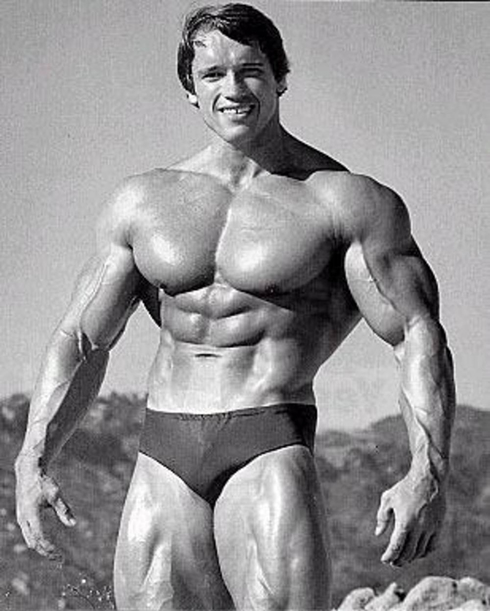
Taking a step back to what I said above, true, sit-ups may be the better exercise for the heavily-defined 6-pack that you want for summer. However, it's important to weigh the benefits of function and aesthetics. As an example, if you look at your typical MMA fighter, a type of athlete who needs to be in the peak physical condition to out-perform the opposition, the abdominal area has a completely different appearance than, for instance, a body builder, who has the look we come to expect from television and magazines. 

As awesome as Arnold is, which of these two individuals do you think would win in a fight?

And that's how we arrive at exercises such as the plank, side-plank, and deadbug instead. By squeezing the core to resist movement rather than to initiate it, we train the core muscles for their proper, evolutionary purpose. 

Yes, I know that this philosophy would clash with that of many others, but if you're a physique athlete, then by all means, do what you need to do to get those chiselled abs. From a health, or even medical standpoint, however, sit-ups have no functional purpose and are more debilitating than beneficial - especially with the amount of time we spend in flexed, sitting positions in modern life.

So, for the sake of your back health, plank away.

...Ladies?