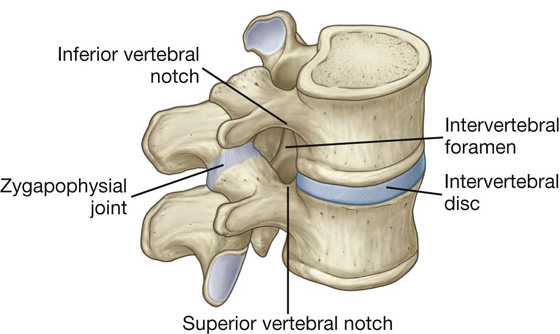
Showing posts with label spinal health. Show all posts

Sunday, 15 October 2017

Happy World Spine Day

October 16 is World Spine Day! Today, organizations and people, worldwide, join together to raise awareness of spinal health and illness.


Listed below is a compilation of back health-related articles written both by myself as well as outside sources. They're all very informative and easy to read, so please take a look and empower yourself with some knowledge!

Cain Exercise Rehab Posts

One of my earliest posts outlining the basic functions of the core as an "anti-movement" system and the reason why the medical community is vigourously recommending against sit-ups.

It's common for weightlifters to fit their ab workout at the tail-end of the session following training another area. However, here's my reasoning on why it's beneficial - for the long-term and for the workout - to do a few sets of core exercises before the rest of the workout instead.

A short article (with video) on how to train your core to stabilize during the much-neglected range of hip-extension for when you walk or run.

Weight lifting belts are a crucial element for weightlifters who are pushing those heavy one-rep maxes or doing fatigue-sets. However, what happens when a person becomes over-reliant on the support?

Traction is an extremely popular alternative treatment for back pain, but here's a short discussion on whether or not there are sound benefits for the long term.

Planks are what the media is currently pumping out as the solution for spinal health and tight abs. However, this is more out of the simplicity of the exercise for the purpose of quick explanation. In reality, planks are only going to get you so far.

This may be one of the most important articles to read! If you have had imaging that revealed degeneration or other concerning problems in your back, click this link!

Source

External Sources

You've probably seen some variation of this headline in the past. However, rather than fear-mongering for likes, this writer dug up the research debunking the claims of "text neck".

Dr. Stuart McGill discusses many popular forms of back pain treatment and why they're likely ineffective - or even counterproductive! Don't worry, he also gives solutions to the problem.

An investigative journalist scours the research to come to her own conclusions on what is actually proven to be beneficial for the spine and what is not.

Spinal fusion is still commonly prescribed by doctors much too early in the process of finding a solution for back pain. More often than not, it only results in more problems down the road.

One more article from Stuart McGill as he debunks the most common back pain myths and offers helpful alternatives to address your pain and injuries.


Subscribe to the Weekly Updates

Do you like the content that you're reading? Sign up to receive the weekly blog update from Cain Exercise Rehab directly to your email!

Tuesday, 27 June 2017

Self-Testing Your Hip Mobility

I did a post a while back regarding the importance of hip mobility for spinal health. I discussed the implications of lumbar spine compensations should the hips not be able to flex and extend properly.

BU T - how common is a lack of these ranges in the hips, really? In that article, I noted that most losses of hip flexion are purely soft-tissue restriction (those darn't hamstrings) while compensations of the spine during extension are likely just due to instability in the core.

In my experience, I've seen very few clients who have a deficit in hip mobility at the joint-level itself in flexion and extension, save for for traumatic accident victims, post-surgical clients, or the elderly.

This isn't to say that it doesn't happen. That being the case, however, considering how many people are aggressively trying to mobilize those ranges at the gym all the time, I'm here to show you some quick ways to self-assess whether you're one of the people who actually requires it. (Pro-tip: You're most likely not one of those people.)

Flexion


Lay down on the floor (not a squishy bed) on your back. Rotate your pelvis all the way forward and make a big gap between your low back and the floor (anterior rotation) and then rotate it back so that the lower back is flattened on the floor (posterior). Now, find the spot directly in between those two end-ranges, which will be your neutral position.

From here, you want to make sure that your hips don't leave that neutral position. Focusing on keeping the pelvis where it is, pull one knee at a time all the way into your chest.

You'll probably notice that you got your knee somewhere between 90 and 120 degrees from the floor. Surprise! You have optimally mobile hip flexion!

Extension


Self-testing your extension will follow a similar pattern. Standing this time, find the a doorway or pole that you can have half of your body up against. Standing with your back to it (one butt-cheek on, one off) find your neutral pelvis position again. Place a hand in the small of your back to ensure that the distance between your back and the surface stays consistent while you extend the free leg back behind you, stopping when you feel your back forced to extend.

An average distance is anything past 0 degrees and up to 30, so if you were able to make it any distance at all, then you're healthy!

My Point

What I'm getting at here is just a demonstration that true flexion and extension hypomobility issues within the joint itself are not common. If you can't flex your legs far, you likely have excessive hamstring tension (removed by the bent knee when we tested). If you're spine deforms in extension, you probably just have an unstable core that's unable to withstand the force generated by hip extension when done dynamically.

If any range in the hip joint is lacking, it's probably rotation, but I'm going to get to that in a future post.

With all that in mind, it's probably time to abandon the banded hip mobility workouts and just start addressing the soft-tissue again like back in the good ol' days.

Subscribe to the Weekly Updates

Do you like the content that you're reading? Sign up to receive the weekly blog update from Cain Exercise Rehab directly to your email!

Wednesday, 19 April 2017

Is Your Core Strong Enough For Your Squat?

A friend called me on Easter Sunday with a bit of an urgent need. He's a good friend, so I came into the office for the holiday. The issue? He threw out his back squatting.

This individual is a very strong, powerful weightlifter, but this wasn't the first occurrence of this type of injury. I had to give him a bit of a hard time, however, as I knew he hasn't been keeping his core conditioned for the heavy lifts he does. Unfortunately, he's far from being alone in this situation.

As I so commonly drone on about like a broken record, core strength is essential for activities of daily living and for keeping the spine healthy during weightlifting and sport. Truly enough, though, with careful attention to form, exercises such as squatting without a strong core is still possible. Especially with back squatting, with the bar sitting at the back of the body to focus the weight through the hips to make it easier to engage the more powerful lower-chain muscles, people tend to neglect the need for trunk stability. What's more, with the arms out to the side with the back squat, we are able to achieve activation of the lats which assist with spinal stability through their connection to the thoracolumbar fascia (which essentially covers the entirety of the lumbar spine).


However, switching to the front squat, with the weight lying to the front of the body and the forces threatening to deform the spine a bit more - and with the lat engagement removed - any deficit in core strength quickly becomes apparent. Back or front, though, injury risk is still prevalent without a well-conditioned core complex.


You see, the final muscle group that's around to try to pick up the slack is the spinal erectors. They're very quick to strain or spasm as soon as they're left alone to bear the weight of a barbell, and most back injuries during squatting occur during those instances that the other muscular systems fail and the erectors are forced to overcontract to try and guard. 


Unfortunately, the going trend is for many gym rats to simply rely on the use of weightliftings belt in order to substitute for core instability and protect their back. This is fine (and probably in best interest) during maximal loads, but becoming dependent on this crutch for submax lifting is doing you no favours unless your intent is to resort to wearing your belt home, to work, and during every other aspect of life as well.

When it came to my client, once we mobilized his (several) joint fixations and settled down the acute spasm, the next step was to emphasize the importance of core stability in neutral hip and spine positions. Once he's ready to return to lifting, I had to recommend he keep his squatting firmly in the submax range while he works on improving his core strength. Until his trunk stability is up to par, there's simply just no point in attempting to increase the weight that the legs can push, less he begin to push weight that threatens to reinjure him again. Essentially, his legs are under maintenance instructions while the core catches up to the game.

Don't let things lead to injury. Do some planks. Do some deadbugs. Don't rely on the weightlifting belt to protect your back because you probably won't be wearing it when you go to pick up your kid.


Subscribe to the Weekly Updates

Do you like the content that you're reading? Sign up to receive the weekly blog update from Cain Exercise Rehab directly to your email!

Tuesday, 4 April 2017

Running Posts That You Should Read

It's spring running season! Track and field leagues are getting off the ground, recreational runners are back on the trails, and city 10K's and marathons will soon be hitting the streets.

To mark this time of year, I'm taking this week to compile together my posts to date on running training and health. If you're gearing up for training, competition, or just beginning to run again for your health, take your time with these reads.

And pull off the 'photogenic runner' like a boss!

5 Weight Training Tips for the Distance Runner

School cross country team? Running your first 10K at the end of the month? Here's a few training tips to optimize your prep time and avoid injury from the pavement-pounding.

6 Weight Training Tips for Sprinters

Is sprinting on the track more your forte? There's a lot of crossover between the training for long and short distances, but there are definitely some key differences to consider in order to maximize your performance.

Core Stability and Hip Hyperextension

Lower back pain is a common issue among runners of all ages and sizes. This is partially due to a neglect of core stability through one specific range of motion.

Your Tight Hip Flexors and You

Tight hip flexors are another common ailment of the runner, as well as a variety of other athletes. Stretching may not be the thing to help you, however.

The Shin Splints Troubleshooter

The all-dreaded shin-splints. Here's a general troubleshooter to help you find some relief and get back to the trails.

Subscribe to the Weekly Updates

Do you like the content that you're reading? Sign up to receive the weekly blog update from Cain Exercise Rehab directly to your email!

Tuesday, 13 December 2016

Hip Mobility for Spinal Health

We hear health and fitness professionals rave on about the importance of hip mobility all the time, but rarely hear much of an explanation for it. The ability for your hips to move through range of motion is crucial for the structural stability of the spine, though. I'll speak on the two most major movements at the hip - flexion and extension - and how dysfunctional range of motion here may negatively affect the back.

Flexion

An inability to reach optimal flexion at the hips is the most-commonly pointed out issue on this subject. Flexion is the movement that occurs at the hip when you bring your knee to your chest. When lacking in range, it can heavily impact your ability to properly perform many exercises at the gym, resulting in the amount of notice it receives.

The most major example of poor hip flexion affect the spine is during the squat. Normally, when sinking into a squat, the spine should maintain it's neutral lower curve. However, if the hips are not able to complete the movement themselves, the spine will compensate and round out into flexion itself - the entire pelvis rolling forward - to reach the bottom of the squat. We commonly know this as "butt wink".

This is the most obvious example of this dysfunction, but the thing to realize is that if this large mechanical error occurs at the gym, it's probably occurring at a lesser - but much more frequent - degree as well during the rest of your day. That means you have excessive spinal flexion when bending down to pick up boxes, when seated in chairs, and possibly even walking and running. 

(Let's side-step and remember that genetics may play a role here, and you may simply be anatomically unable to flex your hips as far as others. In these cases, you still want to work on maximizing the range you have, but may need to accept that your squat won't be as deep as some.)

Extension

The other major movement we see at the hips is extension - the leg pushing back and behind you. Just as with flexion, which a lack thereof can increase flexion of the spine, lack of extension at the hips can make the back compensate in the same way.

This habit isn't as often caught in your typical gym setting, as increased spinal extension isn't often perceived as looking dysfunctional like flexion. However, excessive compensatory extension of the back (most often seen with running athletes) can lead to lower back pain just the same; compression of the vertebral spaces and hyperactivity of the erectors of the spine being significant causes.


Increasing Mobility and Precautions

When it comes to hip flexion, the limiting factors of range tend to be soft tissue and bone. Restrictions of the ligaments as well as tension through the hamstrings are frequent barriers, as are the anatomical limitations that are discussed in the article that I linked to previously.

As for extension, there isn't so much a barrier to the movement, rather there being a lack of muscular stability for it. When the core isn't stable enough to hold the spine steady during the force created by extension of the hip, this is the case where you'll see the form break down and the spine move to follow. However, this is trainable.

As a final note, if you're thinking that you need to work on your hip mobility more now, let's remind ourselves to be gradual and that over-mobilizing can quickly lead to more injuries than it corrects for. Take it gradual, people!

Tuesday, 22 November 2016

How Your Eyes Relate To Your Head and Neck Pain

Try this at home: Sitting comfortably, find the muscular soft spot at the top of your neck, just below the base of your skull. Use the pads of your finger tips to slowly strum through the tissue and gently sink into the tissue. Now, move your eyes around. You should feel the muscles twitching underneath your touch. Fascinated now? Keep reading.

I've treated clients with concussion symptoms and whiplash quite a few times now. To some degree, there's always some involvement of the eyes in their symptoms, whether it's pain, disorientation, or inability to focus. Most of us would never have thought about the importance of the eyes with these movements before, but when you think of it, it makes sense.

Wuuuuhhh?

Eye movement, like every other movement of the body, is initiated by muscles. The muscles of your eyes are small and sensitive, due to the fine control needed for sight. Of these many muscles, the suboccipitals in your neck (sub=below; occiput=the base of the skull) are of high clinical significance.


I've talked before about how pain and spasm work. You experience an injury, your brain senses pain and instability, it causes spasm of the muscles to protect the area, more pain results, and we cycle through over and over again.

When it comes to the topic at hand, when the neck or head experience trauma (such as a concussion or whiplash from a car crash), the suboccipital muscles are among the structures that are sent into this protective spasm. As well-meaning as your body is by doing this, this contributes greatly to the symptoms that follow. As tension increases and the strength and motor control of those muscles is lost, many people will become plagued with symptoms such as migraines, vision problems, eye pain, neck pain, and more.

So to alleviate your symptoms, what can be done. Massage? Yes, but also no. How many of you with these conditions have tried that with only semi-successful results? The pain may go away for the rest of the day, yet it returns soon enough.


Like with any other injury, massaging those suboccipital muscles is only half the work. Remember, the problem is that these muscles are spasming, weak, and lacking motor control. Manual therapy will take care of some of the spasm, but strengthening and reteaching control of the eye movements is mandatory to fully rehabilitate the condition.

Since cluing into these relationships, I've since incorporated eye-tracking assessments and exercises into my rehab programs for clients with neck and head injuries, and these methods have had the most drastic effect on patient recovery over anything else. Once we're able to restrengthen the eye muscles, the spasm and tension in the neck settles down, and symptoms start to subside.

Like I said, the relationship between the eyes and these conditions is not an obvious one, but it's very understandable once brought to light. I'm happy to have found these conclusions, as being able to relieve these life-altering symptoms in shorter time has been very rewarding.

Tuesday, 15 November 2016

Why Planks Are Not Enough

I've seen and talked to numerous people with complaints of low back pain that can't seem to understand why they are afflicted with such; after all, they always do planks to strengthen their cores.


I've seen many people with severe low-back pain who figure that it must be due to something other than muscular strength. They can hold a strong plank for minutes on end and keep going forever. It couldn't possibly a core problem. Well, I'm sorry to say to everyone, planks are not enough. Why?

Strength vs. Endurance

After the first couple minutes of holding a plank, it is no longer a core strength exercises; rather, it's a core endurance one.

Now, core endurance is an essential aspect to health, but more often than  not, the need strength exceeds the need for endurance in these muscles. Whether it's picking boxes up, lifting weights, or nearly any other activity, the core needs the strength to stabilize the spine under these shorter, higher-resistance loads rather than needing to stay activated under excessive lengths of light-resistance.

Planks for muscular strength are a beginning level exercise only. As soon as a client can maintain a strong plank for 1-2 minutes, they are well-past the point of this exercise being useful. It's time to move on.

Single vs. Multi-Plane Movement

Planks also have a bit of a disadvantage in that they address stabilization in a single plane of motion only. Sure, you can flip onto the side and side-plank for the oblique muscles as well, but the benefits here have limits as well. By training stabilization using resistance at only one angle, you're training your core to only be strong and stable at that angle. As soon as you experience any resistance coming at you from a diagonal direction, you're no longer conditioned to bear the load.


Joint Movement

Again, planks on their own are a beginner-level exercise only. They do the job at an early stage to teach us how to use those core muscles to stabilize the spine and prevent movement against resistance.

However, the demands on the core system drastically change and increase as soon as we add joint movement into the picture. Adding arm or hip movement to the mix increases the level of activity required by the core muscles due to change in joint position transferring additional kinetic forces towards the spine. That being said, if you're not training your core to stabilize during joint range of motion (such as with the deadbug), then you're not training your core to be effective as soon as you try to transition to any functional activity.


To reiterate, I very rarely give planks to clients except in the case of very low-function individuals (or if it's an additional part to a larger workout plan that is already challenging the core). It should be considered a first step only.

Clients always require an increased demand as they progress towards returning to activity or higher performance. With that in mind, they require a highly-varied core routine just like every other muscle group does (as the gym-rats out there will understand). Adding weight to the plank, adjusting core exercise angles, throwing in joint and limb movement, and even progressing to plyometric-type impact exercises to challenge the core are are essentials at some point in the plan. It doesn't matter if the individual is a rehab client, an experience gym-goer, or a high-performance athlete; these principles remain sound.

Tuesday, 8 November 2016

Do You Need Traction?

I recently had someone ask me if I thought it'd be worth it for them to purchase their own traction table for at home.

I've also talked to clients who said that they previous paid their last clinic for weekly traction - and almost no other treatment. Sometimes, the timeline went all the way up to nine months! Did this form of treatment help them to resolve their back pain?

Mmm...kinda.

Weeeeeeeeeeeee!

Mechanics

Traction can definitely help to relieve back pain. Is it going to cure it for good, however? Will it correct the mechanics that caused the pain? Likely not.

There are a number of ailments that can afflict the spine. For example, a disc bulge may be pressing on a nerve root. Arthritis may be developing between the vertebrae. There could even simply be a strain to one of the muscles supporting the spine. Any number of things.


Now, traction can be a fantastic tool for relieving the pain experienced by these conditions. Decompressing the spine would relieve how much the disc bulge is pushed on the nerve root. Arthritic changes inside the joint would become spaced apart and less agitated. Traction is even reported to alleviate muscle spasm.

So yes, spacing the vertebral joints apart can absolutely relieve symptoms of a myriad of back issues. However, has this done anything to correct the problem that caused those symptoms in the first place? Of course not. You haven't actually changed anything within the joints.

Spinal Rehab

Recovery from spinal conditions involves restrengthening of muscles, retraining proper motor habits, and stabilizing the joints to prevent future recurrence. True, traction is a great in helping to relieve pain just long enough to be able to move oneself through the recovery stages, but if the posture and biomechanics are not addressed, then recovery will not occur.

That being said, it should be important to know that, firstly, you need much more than traction to fix your back. Other aspects need to be considered. Secondly, once we address the roots of the pain and correct for them, there should be no reason why month upon month of traction is ever necessary. By moving through a proper rehabilitation routine, more results will be achieved in shorter time. In fact, research shows that traction is most effective in treating short-term, acute injuries.

In brief, traction is not a one-shot magic bullet. It's simply more of a painkiller. A painkiller that takes fifteen minutes to swallow while you're hanging upside down. Once in a while, it's worth it, but like morphine, don't abuse it. (For your wallet's sake.)

Tuesday, 25 October 2016

Treat the Whole Chain - Necessities of Recovery

There's no manual on the human body. You can't just open a troubleshooting guide to find out how to fix a piece that's not working properly. As such, I'm not a fan of calling the body a machine. Rather, it's this moist, fleshy mass of tissue and organs that sometimes comes together to work properly. (Yes, "moist". Deal with it.)

How do I look?

That being said, when a piece breaks down and pain is experienced, we don't have the luxury of focusing our attention on that piece alone to try and correct the issue like car mechanics do. If one segment is out of whack, then, guaranteed, others are as well.

Compensatory Mechanics

We all know by now that, when injury occurs or bad motor habits are left unchecked, that the body will compensate by lengthening, shortening, tightening, and restricting in other spots; thus, maintaining functional integrity.

Because of this type of mechanism, spraining an ankle, for instance, means that the overall issue won't stay isolated at that one joint. Because of that sprain, the body will favour one side with a limp, resulting in a lateral hip weakness on the opposite side. That weakness can then be cause for poor knee tracking, SI joint instability, spinal tension, and more. And do these things require years of being unchecked to occur? No. Try a week or two instead.


Intervention

With that knowledge, how can we expect to correct the issues by only targeting the site of the most pain? Here's a good example of how working globally is a necessity when it comes to correcting dysfunction.

I have one client who had discomfort in their hip. We determined that there was an imbalance around the hips that resulted in one side becoming stuck in a hypomobile position. What we did, for the first treatment, was mobilize the joint manually, provide mobility exercise prescription, and then started working on stability for those lower-chain muscles surrounding the area.

So the hip felt great. However, what happened next was that the spinal erectors tightened up by the time of the next treatment. As we promoted more movement through the pelvis and began activating the hip and core muscles to stabilize the area, we were promoting more movement through the rest of the kinetic chain and creating more mobility through the entire spine at the same time. Thus, even though we were strengthening the core, we were also forcing the back muscles to start activating more than they were used to. As tone and tension increased in the lower back, the tension creeped up all the way to the top, exacerbating neck tightness as well.

Sidenote: When we're talking about headaches and 
pressure, we're usually looking at these guys here.

Does that mean we did something wrong during that first treatment? No. It just shows that the body can very effectively compensate for a dysfunction, but when you suddenly intervene in that dysfunction and start to return a joint to its proper mechanics, you need to keep providing similar retraining to the entire chain, both above and below that area.

Significance for Self-Help

These thoughts hold more significance that just for clinicians who are treating a client's injuries. The principals apply to every individual who is trying to address their own fitness and health. 

I talked about "foam roller syndrome" before and how a reliance on self-releasing only the site of pain on a daily basis signals that there are mechanical errors not being addressed. That's exactly what I'm talking about again here. If you are constantly experiencing lower back pain, then constant work on your lower back along will not fix the problem. Neck pain? You need to do more than simply stretch the neck muscles all the time. 

The point here reiterates the time-tested rule that you can't chase pain and expect to chase it away. When there is a dysfunction, it's important to look up, down, and away from the dysfunction and correct the kinetic chain as a whole. Zoning in on one spot will feel great on the first day, but if you stop the efforts there, you can expect the pain to return just as bad - or even worse - soon after.

Tuesday, 26 July 2016

Weight Lifting Belts: The Gym-Goer's Crutch

For many, the weight lifting belt is an essential part of any workout. It seems to be a given that it's the tool that will allow individuals to push heavy loads while protecting their backs. Without the belt, injury can ensue and lifts become weaker. But yet, why do so many serious weight lifters still experience low back pain and injury?


Good Intentions

For the right reasons, weight lifting belts definitely have their place. The purpose of the belt is not, itself, to create stability of the spine. Rather, the compression around the abdomen is a trigger for users to breathe against it and increase the pressure of the abdomen; also known as the val salva maneuver. With the resistance to brace against, this pressure is increased significantly compared to when not using the belt.

On deciding when to use a belt, there are two main reasons. Firstly, when pushing maximal or near-maximal loads that place compression on the spine, such as when trying to break a new squatting record. Having the extra intra-abdominal pressure protecting the spine is going to be a valuable resource to prevent the risk of injury during this instances. The second reason is when training during back-injury recovery. When the strength and stability of your trunk are compromised, the protection turns from helpful to vital, in many cases.

Over-Reliance

Stuart McGill wrote an informative summary on the use of back belts. Most significantly, his research found that, in individuals who had never experienced a prior back injury, a belt did not provide any additional protective benefits.

In fact, based on a study done in the 90's, individuals who regularly trained with a belt had a slightly-increased risk of injury once they returned to their jobs following training. Why would this be?

Well, as I always seem to talk about, training core stability is a crucial aspect to spinal and overall health. Having the external assistance during your workout to help brace the core will, essentially, begin to remove the need for your core muscles to be strong at all. This being said, it makes sense that, if you're training every muscle group except for the core and allowing it to become weak, then you'll be at an increased risk of injury outside of the gym, once that protective brace is removed.

A personal observation that I've also made is that heavy belt use creates a trend toward chest-breathing. Yes, while lifting heavy loads, the belt cues you to brace and breathe into your abdomen. Once the lift is done, however, and you're resting between sets, you're no longer making any attempt to breathe against that resistance. Instead, you follow the path of least-resistance and start reverting to breathing through your chest. As I have quickly demonstrated in the past, chest-breathing does not constitute proper core stability. By becoming a chronic chest breather, you're essentially dooming yourself to an unstable core as well as upper back and neck dysfunction as a result of improper spinal mechanics.


A Physical and Mental Crutch

Can people really be overusing belts so much that their injury risk increase is really going to be so significant? Yes, yes they can. Back to the research, it's been observed that many gym-goers are wearing their belts during inappropriate situations, such as while lifting light loads or doing exercises that do not require trunk stability. Anecdotally, I can attest to this, as I regularly watch gym members still wearing their belts while doing bicep curls, bench press, and even walking on the treadmill.

This becomes a problem. Like any crutch, the more you use it when not necessary, the weaker and weaker you'll become in the areas you're trying to compensate for. Chronic lifting belt use is going to result is chronic core instability, and eventually, these individuals can lose the ability to do even submaximal lifts safely without that support. Furthermore, once they leave the gym and return to their daily lives of lifting boxes or doing yard work, their risk of injury has skyrocketed since they're bodies are no longer trained to self-protect their spines.


It's not as easy as simply telling people that they need to phase out the belts either, though. At this point, people will have also developed a mental reliance on the belts. For anyone who's experienced a bad injury before, think about how it felt when your cast was finally removed, you started walking without a crutch again, or you stopped getting your ankle taped for soccer. As soon as that protection is removed, it's stressful. Many people have difficulty leaving the protection phase (such as in cases of chronic ankle taping) due to fear of reinjury, and this is exactly what will occur when trying to remove - or even decrease - the use of weight lifting belts from many gym rats.

Solutions

The first solution to this problem is education for prevention. Individuals who are new to weightlifting should be encouraged to lift using their own muscular strength without any external assistance like this. Learning proper core stability is vital to learning how to exercise if we are to expect these people to train towards good health. Once people begin to push very heavy maximal loads, the belt may be used. However, caution must be used. I definitely do see proper use of the belt in the gym, which involves use of the belt during those maximal lifts only followed by immediate removal as soon as the exercise is completed - even when it's only a rest period between sets. Dysfunctional patterns cannot be encouraged, so the crutch must be removed as soon as it's no longer necessary.

In those who are already stuck in this loop, the only answer is, essentially, rehabilitation. Many people now have a significant muscular deficit that must now be retrained, not to mention the mental insecurity without the belt again. The crutch cannot simply be removed cold-turkey. It's a matter of restrengthening and stabilizing the core muscles gradually and training the proper muscular systems to fire during exercise. This means more submaximal loads without the belt, but care will need to be given to still allow use - albeit weened use - of the belt during heavy loads in order to not allow the person to lose their overall strength progress that they've worked so hard at over the years.

Closing

For those who have been training for years, these are hard concepts to accept, as their routines have revolved so heavily around these dysfunctional patterns for as long as they've known. (I'm challenging some "core" beliefs here, if you don't mind my awful sense of humour.) Both the research and the anecdotes speak for themselves, however. Traditional lifters are too-often prone to low-back pain and injury. Weekly chiropractor appointments become too common. Clearly, there's has been a problem. Lifters, are you willing to change?

Tuesday, 19 July 2016

Core Stability and Hip Hyperextension

I've been a runner for years, and in the most recent ones, I've done a ton of core training, to say the least. Ever since I learned, myself, of the importance of core stability, I threw it into my regular routine in order to optimize my running performance.

One thing that plagued me, however, was how I still remained prone to lower back pain while running long distances. Not all the time, but definitely often enough to be a bother. I couldn't understand it though; I was specifying my training in order to prevent this back discomfort. Why wasn't it working?

The solution eventually came to me. When doing exercises such as planks or deadbugs, the core is always being trained to stabilize the spine through the hip's range of motion from 0 - 90 degrees, and nothing more. However, when you jog, sprint, skate, or doing virtually anything else active, we are constantly exceeding those 90 degrees, with the hip moving into hyperextension during activity rather than stopping at 0.

It should start to piece together now. Understand that, since the core hasn't been, at all, trained to stabilize during those extra degrees of extension, the integrity of the support breaks down and allows the spine to deform and extend itself, resulting in low back pain.

Now that we have figured out the problem, please enjoy the solution!


Thursday, 9 June 2016

Core Before, Not Abs After

I'll go ahead and assume that anyone reading knows (or at least has heard or read about me ranting) about the importance of core stability for a healthy back. With that in mind, let's quickly discuss one common gym habit.

The gym rats among you may be familiar with the trend of rocking out a few sets of ab work at the end of your workout, tacked on along with the other muscle group you trained that day. (No one ever solely just does a core day, do they?) Like I've mentioned before, if you're going for that six-pack, aesthetic look, then this can be a good idea. Save the painful, stomach-cramping exercises for last so you're not exhausting yourself for the heavy lifts too early. Makes sense, right?

However, from a core stability and spinal health standpoint, and even from a performance one for that matter, stop and rethink your routine. If we're doing core as part of our routine for these purposes, then why are we saving it for the end? These types of exercises have the purpose of making the body stronger by assisting with large movements, so it stands to reason that if we stick them at the front of our workout regiment, then we'll have strong lifts.


In that video, I demonstrate the importance of core activation when it comes to limb movement. When the core is inactive, it's relatively easy to overpower the individual's hip flexion. But when I have him brace his core by breathing into his diaphragm, his hip strength increase exponentially. This essentially demonstrates the power of the val salva maneuver, which has the function of maximizing core stability. When our core is stronger and more active, we capitalize on that effect.

With this logic, it should start to make sense why I recommend doing your core routine as a warm up. By activating these muscles early on, we're increasing the strength we have when we lift heavy and prolong our time before we exhaust and let our form fall apart. With stability exercises, you don't need to worry about pre-fatigue, since unlike traditional ab exercises, core stability does not train your muscles to exhaustion and breakdown. With that being said, I challenge you to try a few sets of deadbugs before you squat next time and feel for the difference. Sans the lifting belt.


Thursday, 12 May 2016

Core Strength and Why Sit-Ups Will Hurt You

When I train clients or teach classes, people often question why I don’t employ the use of any traditional “ab” exercises - in other words, sit-ups, crunches, etc. Upon being asked why, my answer is blunt: Sit-ups are useless, if not harmful.

As a quick anatomy review, our core is a system of muscles that work together for the purpose of “anti-movement” in order to stabilize and protect the spine from damaging forces. If you don’t know, your spine is made up of numerous bony bits surrounding an extremely sensitive softer bit that acts as the closest thing you can identify as the root of all pain.


Demons and Pagan demi-gods notwithstanding.

That being considered, it's in our best interest to condition our core in the most optimal way to do the job of protecting the spine. And the best way to do that is to train using this "anti-movement" that I mentioned. What is anti-movement? It's exactly what it sounds like. It's the contraction of the muscles of your core in order to resist movements and stimuli that could result in injury. For instance:

  • Activation of the muscles in order to support the spine while in an upright position to decrease the amount of prolonged (and stressful) load going through the joints
  • Resistance against trauma that may cause the spine to move through a damaging range of motion (such as a football linebacker tackling you and risking hyperextension of your spine)

Which brings us back to the exercise. Why are we doing sit-ups to train our abs? Sure, some may argue that it's the concentric/eccentric contraction that promotes the most muscle growth to define the abdominals for aesthetic reasons, but at the same time, we're forcing our spine through loaded flexion which is the biggest predisposer to disc herniations. By way of this type of training, we end up not conditioning our core muscles at all to be able to support the spinal column, resulting in numerous back injuries.

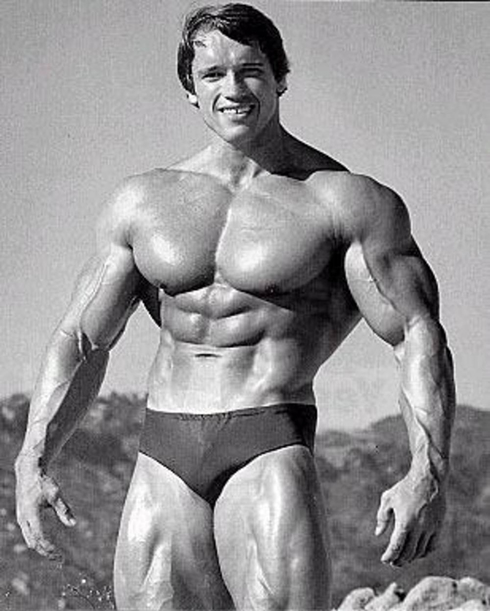
Taking a step back to what I said above, true, sit-ups may be the better exercise for the heavily-defined 6-pack that you want for summer. However, it's important to weigh the benefits of function and aesthetics. As an example, if you look at your typical MMA fighter, a type of athlete who needs to be in the peak physical condition to out-perform the opposition, the abdominal area has a completely different appearance than, for instance, a body builder, who has the look we come to expect from television and magazines. 

As awesome as Arnold is, which of these two individuals do you think would win in a fight?

And that's how we arrive at exercises such as the plank, side-plank, and deadbug instead. By squeezing the core to resist movement rather than to initiate it, we train the core muscles for their proper, evolutionary purpose. 

Yes, I know that this philosophy would clash with that of many others, but if you're a physique athlete, then by all means, do what you need to do to get those chiselled abs. From a health, or even medical standpoint, however, sit-ups have no functional purpose and are more debilitating than beneficial - especially with the amount of time we spend in flexed, sitting positions in modern life.

So, for the sake of your back health, plank away.

...Ladies?