Showing posts with label healthcare. Show all posts

Tuesday, 17 July 2018

Cannabis Research - Things To Consider

I generally don't discuss cannabis use too heavily, as a professional. Partially as to not begin a debate with anyone who disagrees with my views, but also because it's not my place to be recommending pharmaceuticals to clients anyway. However, objectively, there's a lot of stock to be placed in cannabis' use for health and medicinal purposes, and with October 17 quickly approaching, I expect to be receiving many questions on the topic in my practice.


You may have heard, though, the recent story about the major Australian study that found no beneficial use of marijuana for the treatment of chronic pain. This study is making headlines and many are considering this to be a big blow to the validity of cannabis.

However, if we read further than the first paragraph, the study is admitted as being inconclusive. Rather than being a controlled experiment, this study was purely observational. True, the findings were that chronic pain patients who used marijuana in addition to opioids  (as opposed to those who used opioids alone), the marijuana users reported higher pain rates. But, what this study did not control for was the possibility that those cannabis users may have been in higher pain to begin with and could have simply been self-medicating with marijuana due to that fact.


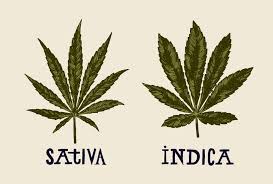
Nor did this study look at the variety of cannabis strains that these individuals were using and the vast number of others that are out there. For those who aren't in the know, this number is closing in on a thousand, with the effects of each type having it's own unique set of effects on the human body.

Let's also remember that opioids, themselves, can have a pain-sensitizing effect in the long-term, and so the dosage of their medications, other treatments they were receiving, and overall lifestyle need to be taken into account.

In fact, there are still many more studies supporting cannibinoids and pain relief, and even some findings that opioids and cannabis together are an even more effective combination. This seems contradictory to the recent story, though, doesn't it?

Overall, we need to keep in mind how restricted cannabis research has been up until this point. Studies and experimentation using marijuana was so difficult to attain approval for that virtually ANY research on the topic is severely lacking. So while, yes, a lot of research is supporting cannabis for medical use, our overall knowledge is FAR from complete.

This being said, there were definitely limitations on the study that seemed to quash cannabis as a pain treatment. At the same time, the research that DOES support marijuana for medicinal use is still in the early stages. No matter which way you lean on the subject, we need to take any findings with a grain of salt for the next foreseeable future. I have no doubt of many of the benefits being reported, but at the same time, I'm sure there are HEAVY placebo effects regarding the creams and ointments hitting the market.

Subscribe

Do you like the content that you're reading? Sign up to receive the weekly blog update from Cain Exercise Rehab directly to your email!

Click Here!

Book Now

In the Victoria area and interested in booking an appointment with Cain Exercise Rehab? Follow the link below to book online!

Click Here!

Tuesday, 8 May 2018

Is There Anything Else You'd Like To Tell Me?

I came across another blog post last week: When You Talk to Patients, Do You Look at Them or at a Computer?

It was a bit of a sad outlook on the state of our medical system, and it's something you've likely experienced yourself. Whether visiting a Athletic Therapist, chiropractor, or even a family doctor, have you ever felt like you were asked only very closed questions rather than being able to tell the story that you were waiting to voice?


I'm unsure if this is a growing trend or just one that's more-commonly reported on, but there seems to be a lack of empathic communication between medical practitioners and their patients. Yes, we as healthcare workers have our framework of questions that remain fairly standard from client to client. However, if a photocopied questionnaire were all that was required, then medical history would not be necessary.

What...what?!

Patients and clients will often not outright voice everything that they'd like to say immediately, often relying on cues and invitations from the professional in front of them before elaborating on how they feel. This isn't being meek; it's human nature! That being said, it seems like too many practitioners ignore and glaze past the clues that clients give them, returning to their standardized framework much too quickly rather than allowing that individual to explain their situation.

"I'm at the end of my limit and need help!"
"Mmhmm, ok. Do you wear orthotics?"

To say the least, this trend does not promote a trusting and satisfied relationship between the client and clinician.

This being said, this is why I'll continue to ask this question to all of my clients; the question that I can't feel like I have a clear understanding of their background without:

Is there anything else you'd like to tell me?


Subscribe

Do you like the content that you're reading? Sign up to receive the weekly blog update from Cain Exercise Rehab directly to your email!

Click Here!

Book Now

In the Victoria area and interested in booking an appointment with Cain Exercise Rehab? Follow the link below to book online!

Click Here!

Tuesday, 17 April 2018

Do No Harm - Treatment Intensity And Consent

"This other therapist I saw just beat the crap out of me."

People seldom expect to see an Athletic Therapist, physiotherapist, RMT, or chiropractor without experiencing some level of discomfort during the treatment. After all, we, as the clinicians, are applying manual pressure into your body to exert some kind of physiological change. Things could get tender!

However, I hear, time and time again, stories of individuals who see practitioners that seem to have a particular level of sadism for making their treatments as excruciating as possible.


As I've covered before, pain tolerance is a very individualized factor when it comes to any treatment. Some people will be able to handle more pressure and discomfort than others, and as a result, those few may actually require a more intense treatment in order to attain the desired desensitization effect from it.

Inversely, if someone has a much lower tolerance to pain, they do not need to - nor should they - receive any treatment method that is more intense than they can handle. Remember, any therapeutic treatment is targeting the nervous system only, rather than causing any true physical change to the tissue. That being said, a client should only need to be taken to their personal threshold for the intensity of a technique to have an effect. What's more, exceeding that threshold may actually result in heightening that person's pain sensitivity.

With that in mind, I cringe when I see these photos - from both clients and clinicians - who are proudly showing off their treatment bruises. "More pain, more gain," is not a principle that applies to healthcare, and taking these extremes is unnecessary at the best and damaging at the worst!


In my view, these mistakes are being made both intentionally and unintentionally. While even the professionals may be prone to forgetting that higher intensity may not be necessary, there are definitely those cases out there where the clinician is trying to use that "more pain, more gain" belief as a placebo or a means of creating some sort of dependency for return-visits. (What can I say? Workers with shady ethics can be found in every field.)

So as a message to other clinicians, be mindful of your treatment and make sure to follow the first rule of your field by doing no harm! To clients, you have a right to tell your therapist to ease off, and if they're too insistent that, no, they need to go that hard, then you also have the right to leave their office. No one has a right to cause you pain without your consent.

Subscribe

Do you like the content that you're reading? Sign up to receive the weekly blog update from Cain Exercise Rehab directly to your email!

Click Here!

Book Now

In the Victoria area and interested in booking an appointment with Cain Exercise Rehab? Follow the link below to book online!

Click Here!

Tuesday, 30 January 2018

Life Doesn't Mirror Gym Movements (And Doesn't Have To)

No, I'm not telling you that the gym is bad and that you should stop going. There are many fantastic reasons why the gym is awesome.


However, there's a certain phenomenon among many of my clients that I'm noticing. Fear of movement.

The best example is the rounded-spine position. On one hand, many individuals who experience back pain are told by doctors, therapists, and more to absolutely avoid bending down and rounding their backs; that doing so will result in more pain. Having this fear of that movement instilled, however, does little to remove their pain, as these positions are, to say the least, inevitable. As a result, the nervous system, essentially, becomes primed and ready to guard against those movements, causing pain in those ranges and positions when pain wouldn't normally be a necessary response in that case. 

We call this kinesiophobia, the fear of movement due to pain which actually works to prolong pain and disability.


Here's the surprising thing. Active and healthy individuals experience this too! I've also seen this in very disciplined gym-goers who, for all intents and purposes, have nothing mechanical going on to suggest that they should be in pain. However, due to the immense emphasis on "good form" that active and athletic individuals may be bombarded with, I've been witness to the exact same avoidance-triggered pain. These are clients who are under the impression that it's necessary to square-up and keep a neutral spine curve every time that they so much as bend down to tie their shoes. And again, this belief that any other type of position is harmful is so strong that, just the same, they experience guarding and pain. Even so-called functional training isn't devoid of instilling these messages.

The takeaway from this is that the body has very natural movement patterns that it likes to use that don't necessarily reflect the strict and controlled form of the gym. Absolutely, if you're at the squat rack, moving in a single-plane only, and are loaded up with multiple plates per side, then you should definitely be observing "proper form". However, whether you're an active or inactive individual with or without formal training, the body is built for free and fluid movement. Don't let anyone, including Instagram personalities, magazines, or even doctors to tell you that dropping form as you live your life is a dangerous thing.

Credit: Greg Lehman


Subscribe

Do you like the content that you're reading? Sign up to receive the weekly blog update from Cain Exercise Rehab directly to your email!

Click Here!

Book Now

In the Victoria area and interested in booking an appointment with Cain Exercise Rehab? Follow the link below to book online!

Click Here!

Tuesday, 16 January 2018

Get Out Of Pain - 3 Steps For Maintaining Motivation


I tend to harp on New Year's resolutions a lot, mostly because of how well-documented it is that they don't work.

That's not to say that it's not possible to make changes at this time of year. However, "because it's January" is a reason for change with a rather abysmal success rate. I see many clients at this time of year who have looked at the calendar, groaned, and decided that it's time to deal with their back pain, and it often becomes my challenge to make sure that they take advantage of that temporary drive and turn it into a permanent one. Here are a few things to think about when you're considering taking the first step.

1) Determine Your Reasons Why

A lot of people will walk into a therapist's office saying that they want to get out of pain, but without much more reason in mind other than "knowing they should" or "have to". Especially in chronic pain cases, this attitude is very detrimental to the recovery process, as it reflects a kind of "going through the motions" approach.

If you've had severe back pain for years, it's easy to default to this attitude, but if you want to make an earnest attempt at progress, then you need earnest reasons for it. Try to find intrinsic, rewarding factors to motivate you such as family, quality of life, return to activity, or longevity to keep you adherent to the healing process.

2) Start Small And Create Goals

Next, those reasons you've determined are important, but going all in with only that end-goal in mind often leads to failure as well. Long-term plans are tough to keep to when the going gets tough and the end barely seems any closer.

If your long-term goal is to run a marathon in two years, remember that you need something to keep your motivation during all 24 of those months. Have a one-week goal, a one-month; two, half-a-year, and so on. Those steps are vital in order to maintain a sense of realism and attainability with the entire process.


3) Expect Speed Bumps (And Prepare For Them)

Clients can often be dismayed by the fact that they've been doing incredibly well in their rehab and feeling fantastic, then hitting a hump and experiencing a relapse in pain. They can often feel like this is an indicator of the treatment not working or that their condition is, in truth, there to stay with no hope of permanent recovery.

This is wrong, however, and it's important that clients know that these are only speed humps, not complete road blocks. Even in drug addiction rehab, a relapse is not considered to be a failed recovery; rather, it's a delayed one with a lesson learned.

If a perfectly healthy person can't expect to never experience an injury, then recovering pain clients don't need to expect to never experience reirritation. Just know that it's coming, have tools to help cope with that temporary increase in pain, and then be prepared to hop right back on the train.

One step back, but always two steps forward.


Subscribe

Do you like the content that you're reading? Sign up to receive the weekly blog update from Cain Exercise Rehab directly to your email!

Click Here!

Book Now

In the Victoria area and interested in booking an appointment with Cain Exercise Rehab? Follow the link below to book online!

Click Here!

Tuesday, 2 January 2018

The Nocebo Effect - Why Belief In A Treatment Is Vital

We all know what the placebo effect is. It's the very real-world phenomenon of the body responding positively to an otherwise ineffective treatment or stimulus caused by the belief that there will be a positive outcome. The placebo effect is, in reality, a large reason for many success stories in the therapeutic world, believe it or not. In fact, some modalities actually rely on a patient's belief that it will decrease their pain.

Source
BUT.. did you ever stop to consider the opposite effect being a possibility as well?

The "nocebo" effect is classified as when a negative expectation results in a negative outcome, whether it's to do with movement, nutrition, a clinical treatment, or virtually anything else. Truly, it's the other far-side of the spectrum from the placebo.

This ties directly in with my past topics about how language selection and expectations of pain can propagate and cause more pain. Like I've said before, mental state has a huge effect on driving the body's outputs, whether it be pain, inflammation, or more.

This being said, the nocebo has a massive influence on the effectiveness of a therapy treatment. If a client does not believe in a certain type of treatment or modality or they think that it will cause them harm, then it absolutely can interfere with the treatment outcome!

For this reason, I do my best to thoroughly educate my clients in exactly what kind of processes are occurring in their body before, during, and after any treatment I provide in order to help them understand the targeted effect and increase the probability of success.


If a client simply doesn't believe in a modality at all, then that's ok! Therapists work for the client, not the other way around, and the client does not HAVE to subscribe to every philosophy. However, in absence of that belief, gears need to be switched with either a new approach or a new therapist, otherwise we're charging that client continually for treatments with no outcome. And that's where responsibility on the clinician's side comes in.

The brain is a funny thing, but it's the boss. We gotta work with it.


Subscribe

Do you like the content that you're reading? Sign up to receive the weekly blog update from Cain Exercise Rehab directly to your email!

Click Here!

Book Now

In the Victoria area and interested in booking an appointment with Cain Exercise Rehab? Follow the link below to book online!

Click Here!

Monday, 18 December 2017

Removing Pain - An Example Of Pain Expectation

I had an awesome experience regarding pain psychology and coaching this week. I've already written before about how pain can be amplified purely due to expectations of pain, but it's always great to have some real-world examples rather than only scientific studies.


I had a chronic-pain client come and see me in the past week after a particularly-stressful time period. As a result, her pain sensitivity through her neck and upper traps was through the roof, and she recoiled from only very light pressure from my hands.

Knowing that it wouldn't be productive to simply try and force my way into her muscle tissue and use physical means to get my client to relax, I instead did some education on pain.

I used this great example from Dr. Jarod Hall, on Facebook where he talked about how he experienced a splinter poking him in the back in a sauna. However, due to being in the hot sauna, his nervous system interpreted the "poke" sensation as "burning" due to the expectation of what kind of a sauna would typically cause. Yep, the body can be that easy to trick!


With that being said, I was able to use that experience to teach my client on how it's unnecessary to expect pain, especially when the oncoming stimulus isn't an appropriate one. By coaching her through self-talk to convince her that the pressure from my hands, while perhaps not being the most comfortable, wouldn't cause her any physical harm or damage, her pain sensitivity decreased dramatically. And just like that, without any other physical intervention, I was immediately able to apply more pressure to those sensitized area than ever before!

Remember, pain isn't all in your head! But the head sure can affect things!

Subscribe

Do you like the content that you're reading? Sign up to receive the weekly blog update from Cain Exercise Rehab directly to your email!

Click Here!

Book Now

In the Victoria area and interested in booking an appointment with Cain Exercise Rehab? Follow the link below to book online!

Click Here!

Tuesday, 12 December 2017

Sleep and Pain

In the big picture, Canadians don't seem to do too bad in terms of sleep. Two thirds of adult Canadians are getting the recommended 7-9 hours of sleep. A third is still a very large number, though, and overall sleep quality may still be an issue. We all know the typical effects of sleep deprivation; the decreased mental function, the irritability, the mood swings. However, can sleep affect pain as well?

If I just never wake up, I'll never feel the pain.

The short answer is yes. It's been well-documented that poor sleep and increased pain have a strong correlation. Testing responses to specific stimuli before and after sleep deprivation in subjects has definitely shown an increased output of pain to all types of different pain sources. Heat, cold, pinprick, deep pressure, and other types of provocations all show these results.

However, when looking at sleep deprivation and the cascade of other symptoms it provides, it brings up another questions. Could these related conditions be the true cause for pain sensitivity? Indeed, some studies are finding that sleep disturbances are do have a more indirect link to pain, suggesting that increased pain perception is more-related to those depressive symptoms and how much attention to pain that these individuals may have.

So, perhaps we're looking at is a type of central nervous system fatigue. As I've discussed before, both physical and mental illnesses can propagate these chemical changes in the brain and contribute to pain.

No matter the cause, it's clear that poor sleep and pain ARE related, and unfortunately, this relationship is cyclical. Poor sleep heightens pain levels, and it doesn't take much thought to understand that chronic pain results in even more sleep disturbances.


Treating this, obviously, is a complex thing, and could very well require a comprehensive medical team, rather than one therapist, including sleep specialists, psychologists, and more. On my own, as an Athletic Therapist, what I can do is try to begin breaking that pain-sleep cycle, just like the pain-spasm cycle, and provide a bit of relief at a time in order to slowly improve sleep quality as the client and I go.

Sleep on that.

Subscribe

Do you like the content that you're reading? Sign up to receive the weekly blog update from Cain Exercise Rehab directly to your email!

Click Here!

Book Now

In the Victoria area and interested in booking an appointment with Cain Exercise Rehab? Follow the link below to book online!

Click Here!

Wednesday, 29 November 2017

Breaking Down the Buzzwords - 6 Blog Topics to Read

Buzzwords are every media-mogul's bread and butter. Need proof? Just look at how quickly everyone and their grandma eats up any news article with "Trump" in the headline.

Ok, enough about politics. I'm supposed to be writing about things that are healthy for you. (Ok, last one, I'm sorry!)

I came so close to posting a Trump meme as well, but I
stopped myself and went with a funny cat photo instead!
Your welcome.

Just like the nutrition and diet enterprises thrive off buzzwords such as "gluten", "cleanse", and "clean-eating", so does the healthcare and fitness realm have its own shortlist, at any given time, of words and phrases meant to strike a chord and turn the population into click-hungry internet trolls.

Pictured: A troll

Obviously, these trending topics make for easy game when it comes to looking for new blogging jumping points, so here's a collection of posts from the past couple years that break down each buzzword, both for better and for worse.

Fascia


"Myofascial release" is the new thing to do to get your body feeling great! Right? Well, it seems like many fitness enthusiasts are treating fascia like it's an evil entity that needs to be utterly destroyed. (Spoiler: It's not!)

Functional Training


Functional training is where "fitness is headed", by the sounds of it. Enough of isolated movements! Give me more squats on a BOSU! Let's stop and ask ourselves, though, where does "functional" begin and where does it end?

K-Tape


Ok, so maybe Kinesio tape isn't quite in the headlines the same way as it was for the couple years after London 2012. However, it still seemed worth it to revisit my own, quick, review on the application.

Mobility


The fitness industry seems to be preaching about proper joint mobility these days. Is there a benefit behind greater mobility? Is any amount too much? Is a conservative approach better? Lastly, what else, besides mobility, needs to be considered?

Posture


Forward heads and rounded shoulders are being demonized more and more in mainstream media. Is there really anything to be concerned about, though?

Trigger Points


Get that lacrosse ball and grind out those trigger points. Find that painful spot in your shoulder and press into it until it basically dies! Wait, is that right? Is every painful nodule a trigger point, or are our bodies more complicated than that?

Subscribe to the Weekly Updates

Do you like the content that you're reading? Sign up to receive the weekly blog update from Cain Exercise Rehab directly to your email!

More Pain, More...Pain?

A lot of you reading this may subscribe to - and possibly live by - the "more pain, more gain" rule. The harder you workout and the more sore you get, the more strength and size you gain. The harder you run through the burn, the faster you become. Transferring this train of thought to the rehab realm: the harder you dig in there, the better you'll recover.

http://serre-humour.com/

Whether it's through traditional massage, Graston, cupping, active release, or some other form of modality, does a higher intensity of the treatment correspond to increased recovery? In other words, does a more painful session somehow equate to less pain once a client leaves? (Even if the client can "take it"?)

Well, let's consider the reasons why people may believe that "going harder" results in an increased benefit. For instance, when it comes to tight muscles, scar tissue, adhesions, and the like, the common believe is that these modalities are physically breaking down those restrictions. Unfortunately, as I've pointed out in the past, massage does not break down muscle or scar tissue. Rather, these treatments are providing a new sensation to the nervous system in order to allow the tissue to relax and release its tone in the region.


That being said, given that this effect is nervous system-driven, more or less pressure may sometimes be required. Pain tolerance, while not all in your head, can dictate how much of an effect you experience from treatment. With that in mind, however, it can mean that a highly-sensitive person can get the exact same result from a very light massage as a very highly pain-tolerant individual with a more aggressive session of active release.

With all of this being the case, I can't say that I'm very comfortable with trying to give anyone a "harder" session of soft-tissue work than they can take. Some discomfort is to be expected, of course, but if I'm causing excruciating pain, I don't see how that can result in the pain relief that I'm striving to achieve. In fact, the intensity of these treatments might actually work to increase pain-sensitivity, acting in the exact opposite direction of what the goal is!

Does this diminish the usefulness of therapists, however? Of course not. It's still my job to be able to gauge each individual's reaction to different sensations and deliver an effective treatment that remains within their tolerance. When it comes to modality application, just call me a Conservative.

Subscribe to the Weekly Updates

Do you like the content that you're reading? Sign up to receive the weekly blog update from Cain Exercise Rehab directly to your email!

Tuesday, 14 November 2017

Brain-Body Trust

Here's another scenario:

You're an avid weightlifter who hits the gym five times per week. You regularly do squats, deadlifts, and many others of those exercises that gym rats know and love.

Gains.
However, despite your ability to deadlift twice your bodyweight, one morning, you simply bend down to tie your shoe and you completely put out your back. You're in excruciating pain for the rest of the week which lingers to a lesser extent for the next month or so before you go and get it treated. All the while, you've been doing what you can at the gym but have been avoiding deadlifts and have been extra cautious when bending over to pick anything up on a daily basis in order to protect your back. Every time you try to bend down, you recreate that most-painful sensation and it needs to be avoided. Finally, you decide to go get treated. (Perhaps even by an Athletic Therapist!)

Promotionpromotionpromotion.
Treatment goes great. After one or two sessions, the constant pain is no longer a bother. You have your homework to condition and strengthen your core and protect your spine. You go on your way out of pain - except when it occurs the next time you go to deadlift again. Although your therapist told you that the tissue is all healed and the inflammation is gone, that bending motion, alone, still elicits tension and pain through your back as soon as you square up to lift heavy.

So here's the question: Even after receiving treatment and home exercises, after the tissue is healed and the inflammation is gone, once you've gotten strong enough that you core should be stabilizing your back without a problem, this one movement still causes you pain. Why could that be?

Pain science is a fascinating field and I'm not about to go into the neurobiology and in-depth psychology of pain today. However, I will quote the Pain Science Podcast that I listen to in this.

"Pain is a conditioned response," and "Pain is an output, not an input".

If you know of the Pavlov experiment, this is like how he was able to trigger salivation in dogs every time he rung a bell. Essentially, all physiological responses, pain included, can be conditioned to occur whether the stimulus is appropriate or not. This is related to when I talked about pain avoidance habits and how they can propagate pain rather than prevent them. After such a prolonged period of time of an individual telling their nervous system that bending down is going to cause pain, the nervous system is now trained and hyper-reactive, sending out pain signals every time that movement is performed even after healing has occurred.

Not kidding. This picture is how pain can work.
This is actually a common occurrence. Clients who should be out of pain are still experiencing it due to their nervous systems, basically, working against them. In a way, although there is not actually anything wrong with those tissues anymore, the brain no longer trusts that particular movement pattern and will have a sympathetic response every time that it's attempted.

Stupid nervous system!
This case I'm discussing is, in reality, actually one of the more simple ones. In severe chronic pain cases, those inappropriate pain triggers can extend to nearly every movement and even light touch to the body!

In any of these cases, careful rehab considerations to both the physical and psychological side of the recovery are required. It's the responsibility of the therapist to guide the client through those movements - or other stimuli - very carefully to progressively allow the nervous system to adapt and trust the pattern again. At the same time, coaching a client away from expecting pain is important, otherwise it may leave a barrier that the individual might never overcome. 

Pain is a funny thing and pain patients are kind of like the Murphy's Law of healthcare: Expecting the worst can cause the worst to happen. However, responsible therapists can recognize these barriers; no person should be trapped by their pain.

Subscribe to the Weekly Updates

Do you like the content that you're reading? Sign up to receive the weekly blog update from Cain Exercise Rehab directly to your email!

Tuesday, 31 October 2017

I Don't Know It All

I admit it! I'm not perfect! While I wish I could know every minute detail about human anatomy and physiology to a "T" and call myself an expert on everything that is rehab, the reality is that this is not the case.

Don't worry, this isn't me going on a depressive rant and feeling sorry for myself. (That's what Valentines Day is for.) This is a productive admittance of the limitations that all medical professionals have but don't always like to verbalize.

We also don't always like to admit our Valentine woes, either.
The thing is, there is a LOT to know about the body, and as humans (Yes, therapists are humans! Gasp!) we can't perfectly log, file, and access that information without flaw like computers. Speaking for myself, I'm probably pausing every fifth or so new assessment that I do with clients in order to check a reference. (If you follow my social media, you've probably seen my textbook collection. And to tell you the truth, it's a very small collection compared to others out there.)

Yes, I need another bookshelf. Nerd problems.
Thankfully, I've been gifted with clients who are perfectly fine with me, as their clinician, taking a minute to check a reference. In their words, they're happy to know that I'm absolutely sure on what I'm doing rather than just trying to guess, and the anecdotal message I get is that they wish more medical professionals (doctors included!) would do the same more often.

Frankly, my opinion is that any clinician who claims to always be 100% sure without a fault and never needs to reopen a textbook probably, in fact, knows the least. (Or is just being irresponsibly stubborn.)

What's more, this piece of humble pie goes a bit further. What if that textbook doesn't give me the answer that I need? Well, it sometimes hurts to have to go to my client and say it, but ethically, I have no choice: "I am not entirely certain on what this is."

At least it tastes like cherry!
The saving grace here, again, is the trust that this level of honesty instills in my clients. Knowing that I'm not going to feed them false information, I'm often allowed the chance to have the client return to, at the very least, see if whatever treatment I performed worked. If it does, then we know that we're on the right track and can keep plucking away. If not, it's time for a referral.

To sum it up, no Athletic Therapist, chiropractor, nurse, or even doctor can have the answer 100% of the time. Perhaps some people there expect us to, but I feel like the majority of the population understands the raw amount of information out there. As long as we clinicians are honest with our limitations of knowledge, it seems like the public will accept that as a sign of integrity and be willing to work with us.

Subscribe to the Weekly Updates

Do you like the content that you're reading? Sign up to receive the weekly blog update from Cain Exercise Rehab directly to your email!

Tuesday, 10 October 2017

Let's Talk Mental Health

Yesterday was World Mental Health Day.


It's my job, as an Athletic Therapist, to take care of the physical side of health, but through that, I run into the overlapping cases of depression, anxiety, eating disorders, self-confidence issues, and more. Often, my clients trust me enough to open up to me, and hopefully we, as a society can continue to do so more and more.

Below is a quick compilation of mental health and psychology-related posts that I've written in relation to my Athletic Therapy work as well as sport and fitness in general.

I didn't write on the mental health aspect of addiction, but with addiction being a mental illness itself, I'm including this post to talk about the benefit of active rehab measures in order to avoid these negative outcomes.

A passionate article I wrote about the importance that I discovered when it comes to building confidence and ability in youth for the benefit of their mental health in future years.

I discuss the importance of careful language when treating clients. When reeling from the mental distress of an acute or chronic injury, it's vital to not cascade the issue with poor word choices.

Discussing some of the mental health changes that occur when it comes to chronic pain that may impede the recovery process.

Fatigue of the CNS can easily result in detrimental changes to the physical body. What's more, we are finding more and more than mental illness, among other things, can propagate this central fatigue, highlighting the importance of mental health for the sake of the physical.

Again, I talk on another factor that mental illness can affect. While pain tolerance can be affected by mental health, we cannot consider these effects to be all "in your head".


Subscribe to the Weekly Updates

Do you like the content that you're reading? Sign up to receive the weekly blog update from Cain Exercise Rehab directly to your email!

Random Thought On Exercise Adherence

As an Athletic Therapist, I'm obviously always concerned with how to keep my clients adherent to their exercise plans in order to accelerate their recovery. It's not always easy, especially when that client's motivation was low enough that they barely made it to my office in the first place.

It's funny, though, some of the methods we employ to try and keep ourselves motivated. One common thing I've noticed that people attempt to do to keep themselves true to healthy habits is bargaining the use of passive habits in order to achieve them. Allow me to explain..

Once in a while, I see a client who floats the idea of adhering to their rehab plan by doing their exercises during "down-time" to make it easy, such as while watching television. Unfortunately, not a single client who has said this has been able to maintain their routine. Where is the disconnect here?

I'm too snuggly-wuggly comfy to exercise right now!

Well, it could simply be the fact that using those passive activities is only going to motivate our psychology toward more passive habits, rather than the other way around. When it comes to exercise in general, our brain is going to activate these exercise-related habits when it experiences related stimuli that normally goes along with them. (ie: When the "switch is flipped" when you walk into a gym or get up early for your run.) Since your brain is going to have trouble associating passive activities, such as television, with activity, the chances of developing those habits are slimmer.

As well, this is speculation, but perhaps trying to bargain passive methods in order to stay healthy is a sign of poor self-efficacy. Maybe someone who attempts to use these tricks, in reality, has poor confidence in the first place that they will adhere. And as we know, self-efficacy is vital when it comes to lifestyle changes and without that sense of control, success rates are low.


In short, the clients of mine that are the most successful are the ones who are intrinsically motivated enough to set aside time to, well, get'er'done!

Does this mean that a person is a lost cause if they're not one of these go-getters who's ready to go guns-out and balls-to-the-wall with their recovery, however? OF COURSE NOT!


This article was written based on topics collaborated on with of Sasha Tanoushka, owner of Verus Systems Therapy. Sasha is a member of the BC AMFT and AAMFT  ( American Association of Marriage n Family Therapists  ). She's completing her MA in Marriage And Family Therapy through Northcentral University. She's worked extensively with families and individuals over the years in both community sports, martial arts, kids' clubs and ladies' community groups.

She has a particular interest on neuropathy and works with several therapeutic modalities but has a particular leaning towards Satir, Bowen and Gestalt.

Follow her on Facebook!


Subscribe to the Weekly Updates

Do you like the content that you're reading? Sign up to receive the weekly blog update from Cain Exercise Rehab directly to your email!


Tuesday, 3 October 2017

Pain Tolerance - It's Not All In Your Head

"When you asked me to rate the pain, what happens when someone just has really, really high or low pain-tolerance?"

This was a question posed to me by a new client, and a very understandable question at that. If a client has really low pain-tolerance, does that mean we need to ignore their pain level when treating them in order to make progress? If tolerance is high, are we doing more damage to them by pushing too hard without them being able to set proper limits? Again, if tolerance is low, is that person just being soft?

"I'm smiling. Are you smiling?"

The quick answers: No, pain tolerance is not all in your head. No, you're not a wimp. And no, we are not risking going too hard or too soft with treatment and exercise because you're tolerance is higher or lower than the average person. I digress...

What Affects Tolerance?

There are too many things that affect pain tolerance to try and go in depth to them all. There is a slew of cultural differences when it comes to perception of pain which can be affected by age, sex, or race alone!

Psychological factors also affect this tolerance. Again, I'm not saying that the perception is all in one's head. Rather, certain aspects of one's psychology, such as perception of controldepression or anxiety, and expectations of pain can all cause physiological changes within the nervous system and propagate pain sensitivity.

Finally, looking at a more at the peripheral sites of pain within the body, the reactions occurring at the nerve endings, during inflammation responses, and communications between the immune system and nerve cells all affect pain sensitivity and can become more or less reactive, depending on a person's condition. It's complicated. I spent an entire night trying to make sense of the biochemistry of it in order to summarize it in my blog and ultimately had to give up. I promise that the science is there, though!

Need-to-know!

The Affect on Treatment and Rehab

So with that being said, we circle back to the question about the effectiveness of rehab and treatment when pain sensitivity and tolerance are higher or lower. If pain is preventing us from massaging a muscle hard enough to make a change, where is the benefit? If a client is insisting to keep going harder when you're already, essentially, on top of them with all of your weight, are we not going to hurt them more?

Well, as I covered in the past, the system that these treatments target isn't the muscular one. When we massage, when we exercise, we're addressing the nervous system itself, and so we're doing the body a favour by working within those limits (or lack thereof) of sensitivity and pain tolerance.

To a limit. Please don't actually try to break
someone's back because they asked you to..

With that being said, if someone is highly-sensitive and can only tolerate very light touch, then those are the means that we'll stay in. By treating or exercising within that high level of sensitivity, the goal is to try to reverse some of those physiological changes contributing to it in order to, gradually, decrease the sensitivity and allow the client to eventually be able to accept more pressure.

On the flipside, if someone is highly-tolerable to pain, then yes, the treatment does become a bit tougher and more aggressive to try and meet their needs, but you don't have to worry about causing damage. Like I've noted before, the amount of force you would require to actually deform or damage tissue would be roughly the equivalent of a steamroller.

Don't try this at home.

Subscribe to the Weekly Updates

Do you like the content that you're reading? Sign up to receive the weekly blog update from Cain Exercise Rehab directly to your email!