Tuesday, 25 July 2017

Pain Psychology - Identifying With Pain

As I continue into my practice as an Athletic Therapist, it fascinates me on how much of a mind-game rehab is; not simply a body one alone. It's not as easy as rubbing a client's sore muscle and telling them to exercise. If it was, my job would be way too easy.


Pain has a large impact on our physical as well as psychological state. Inversely, both physical and psychological factors play a role in its onset, frequency, severity, and more. Over multiple posts, I plan on discussing just a few of the many psychosocial factors that influence pain and some of the tools that I use to help clients past them.

One major phenomenon that all therapists run into with clients, especially those who live with chronic pain, is the circumstance of individuals who identify with that pain. In the same way that a person can identify as - and revolve their life and their psyche around - being an athlete, a mother, or an academic, it's equally possible to do the same with pain.


To my understanding, this occurrence is one that allows people to turn the situation around and, in their minds, making the existence of their pain "ok". Patients have been observed using this principle to keep the blame and ownership for their own pain away from themselves, potentially treating it as simply a "fact of life" in order to cope and make the sensation easier to handle. To complicate the matter, it's suggested that patients can end up relying on their pain for self-identity, creating a crisis if pain is, in fact, remedied.

So here's the challenge. When clients who come in who are so used to and accustomed to pain that it's a part of their entire identity and if taking their pain away risks causing an identity crisis, what do I, as the clinician, do?

A lot of the process comes down to classic first-year psychology class methods, believe it or not. Visualization and imagery is crucial, as pain-sufferers need to be able to envision a future outcome that involves an improved condition (even if it's not a complete recovery). Doing so prepares them for what could be considered their "new identity", creating a pathway for the transition after pain is gone. Following the creation of that long-term end result, shorter-term goals need to be established in order to make the process of reaching the outcome seem plausible. (Sound familiar, everyone who went to college ever?)

We'll never use any of this stuff.
Past that, there are too many other skills and methods used to assist clients along their recovery process to fit into one post, but what I've written here offers a good start. For all of what I've said, this is the reason why my appointments tend to be so chatty, but those psychological barriers need to be addressed if there's to be any hope of treatment success.

When it comes to treatment, exercise, and rehab, "just do it" doesn't quite cut it. Sorry, Nike.


This topic was written with consult and collaboration with Alison Quinlan, a Sports Behavioural Consultant in Victoria, BC who is also pursuing continued education in dietetics. Follow her on Twitter and visit her website and blog to see some of her own authored articles. 


Subscribe to the Weekly Updates

Do you like the content that you're reading? Sign up to receive the weekly blog update from Cain Exercise Rehab directly to your email!

Tuesday, 18 July 2017

Specific Adaptations to Imposed Demands

There was one principle that was commonly reiterated to us all throughout school. 

SAID: Specific Adaptations to Imposed Demands

Whether it's for rehabilitation or for fitness, this is a very important thing to note about the body's reactions and adaptations to the stresses we place upon it. Beneficial changes cannot and will not occur if we don't give them a reason to happen.

So, in the same way that you won't gain muscular size if you don't work out, you also can't expect tissue to properly heal following injury if we don't exercise it in the manner that we need it to function.

Why aren't I in shape?
Essentially, you use it or lose it. I can't tell you how many times I've heard potential clients decline starting rehab in their acute phase of injury because they think that they need to rest and wait first for partial healing to occur on its own. This is especially rampant among elderly demographics who simply feel unsafe attempting any sort of exercise too close to their injury.

It doesn't always have to come to this!

Unfortunately, young or old, too much rest is more detrimental than anything. Immobilizing injured tissue results in it healing in a way that typically doesn't allow for optimal return to activity, as the tissue was not stressed with any of the demands that replicate it's intended function.

I cringe every time someone tells me that their doctor recommended nothing but bedrest; something that is still painfully common. Inversely, when an injury occurs on an athlete whose team I work with, I get to witness the increased speed that they bounce back completely from injury. Just by jumping on top of exercise and range of motion immediately during the acute phase, we're able to seriously cut down on their recovery time.

I'm being real; I'm not expecting you to box jump and power clean directly after blowing your ACL. There's always some sort of movement that is possible, though, and something is always better than nothing.


Subscribe to the Weekly Updates

Do you like the content that you're reading? Sign up to receive the weekly blog update from Cain Exercise Rehab directly to your email!


Tuesday, 11 July 2017

Cross Syndrome Is Not A Disease

I've spoken to several people lately who have been very concerned with their "cross syndrome" and have sought my advice in correcting it.

For those not in the know, cross syndrome is a term coined by Vladimir Janda in the 80s for a series of muscular and postural imbalances. It signifies the criss-cross pattern of shortening and lengthening of muscles that results in postural imperfections, such as the classic forward shoulder position from tight upper traps and pecs combined with weak neck flexors and lower traps.


These cross patterns occur through both the upper and lower body as termed by Janda. Similar principles exist through the entire kinetic chain overall, not being isolated with just the aforementioned saggital (front and back) planes.

I take issue with the name "cross syndrome", though, as I find that it's regarded with more fear than it should. The term "syndrome" is mistaken by many individuals (usually ones that are self-researching for their own health or working in fitness) to be synonymous with "disease". This is absolutely not the case.

I wrote before about how textbook posture is an unrealistic achievement and a largely-unnecessary goal. These cross patterns (as I prefer to call them) are often correlated to injury, yes, but not causative to them.


Many, many people will walk around with forward heads and rounded T-spines their entire lives and never experience shoulder pain. Anterior pelvic tilt does not automatically signify lower back pain. We need to not fear these postural imperfections and think that they always need to be corrected for.

Obviously, these patterns are something that we pay attention to if there is pain, because they provide the rehab practitioner a good place to start in terms of relieving the symptoms and the mechanics that caused the injury. In absence of a symptomatic dysfunction, though, there's very little to gain by trying to address the "imbalance".

All in all, there's no real problem with wanting to train yourself to stand taller, but we shouldn't be concerned when we look sideways in a mirror and notice "upper cross syndrome". If it ain't broke, don't fix it. If it doesn't hurt, if it doesn't impede your performance or day-to-day activity, it's probably functional.


Subscribe to the Weekly Updates

Do you like the content that you're reading? Sign up to receive the weekly blog update from Cain Exercise Rehab directly to your email!


Tuesday, 4 July 2017

Fascia: Not Your Enemy

Fascia spent many decades with status as the "forgotten system". Indeed, we got very used to only ever thinking of the body as a neatly-compartmentalized container of separated organs. Fast forward, though, and the past few years have seen fascia blow up as hot topic among medical and fitness professionals, bringing to light how these system keeps the body so closely interconnected and supported.

However, with awareness of fascia came this strange demonizing of it. Fascial pain, myofascial release, foam rolling, trigger point release, and more. I hear so many people attempting to boil down all their pain and dysfunction to fascia and trying to roll it out and stretch it cellophane-thin in order to address it.


But let's try to remember that, like all other systems of the body, the symptoms of fascia are a product of your lifestyle and habits and that all of your systems are being affected together. It's irresponsible to try and narrow down all of your problems to just the one type of tissue; if there's pain or dysfunction in it, it's absolutely being caused by overall mechanical issues being contributed to by multiple other structures.

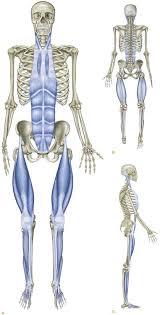
For instance, I had one client who had confusing knee pain symptoms that kept bouncing around to different areas around the knee and occurred bilaterally. When the pain was clearly not purely muscolotendinous, I considered it to be fascial. To test this theory, we went up the chain to the neck and treated the muscles that were fascially connected to the painful areas of the knee (the superficial front line pictured below) and then reapplied stress to the knee. What do you know, the pain had alleviated!

The superficial front line

Does this signify the fascial involvement in my client's pain? Yes. Does this mean that all we have to do is treat his fascia? Definitely not. We still have to consider the muscular restrictions that may be causing secondary fascial tension. We need to address the reasons why that anterior chain is experiencing shortening and tension in the first place to allow the fascia to adhese in the way it is. Whether myofascial involvement is the primary, secondary, or tertiary issue, you have to touch on it all.

In short, we need to stop treating the topic of fascia like it's the enemy that's causing all of our problems or that treating it is the end-all-be-all solution. Healthcare and fitness professionals alike know that we need to treat the body as a whole, but sometimes even we need a good reminder to not become hyperfocused on one aspect.

Fascia, it's not an enemy. It's a victim.


Subscribe to the Weekly Updates

Do you like the content that you're reading? Sign up to receive the weekly blog update from Cain Exercise Rehab directly to your email!
Tuesday, 27 June 2017

Self-Testing Your Hip Mobility

I did a post a while back regarding the importance of hip mobility for spinal health. I discussed the implications of lumbar spine compensations should the hips not be able to flex and extend properly.

BU T - how common is a lack of these ranges in the hips, really? In that article, I noted that most losses of hip flexion are purely soft-tissue restriction (those darn't hamstrings) while compensations of the spine during extension are likely just due to instability in the core.

In my experience, I've seen very few clients who have a deficit in hip mobility at the joint-level itself in flexion and extension, save for for traumatic accident victims, post-surgical clients, or the elderly.

This isn't to say that it doesn't happen. That being the case, however, considering how many people are aggressively trying to mobilize those ranges at the gym all the time, I'm here to show you some quick ways to self-assess whether you're one of the people who actually requires it. (Pro-tip: You're most likely not one of those people.)

Flexion


Lay down on the floor (not a squishy bed) on your back. Rotate your pelvis all the way forward and make a big gap between your low back and the floor (anterior rotation) and then rotate it back so that the lower back is flattened on the floor (posterior). Now, find the spot directly in between those two end-ranges, which will be your neutral position.

From here, you want to make sure that your hips don't leave that neutral position. Focusing on keeping the pelvis where it is, pull one knee at a time all the way into your chest.

You'll probably notice that you got your knee somewhere between 90 and 120 degrees from the floor. Surprise! You have optimally mobile hip flexion!

Extension


Self-testing your extension will follow a similar pattern. Standing this time, find the a doorway or pole that you can have half of your body up against. Standing with your back to it (one butt-cheek on, one off) find your neutral pelvis position again. Place a hand in the small of your back to ensure that the distance between your back and the surface stays consistent while you extend the free leg back behind you, stopping when you feel your back forced to extend.

An average distance is anything past 0 degrees and up to 30, so if you were able to make it any distance at all, then you're healthy!

My Point

What I'm getting at here is just a demonstration that true flexion and extension hypomobility issues within the joint itself are not common. If you can't flex your legs far, you likely have excessive hamstring tension (removed by the bent knee when we tested). If you're spine deforms in extension, you probably just have an unstable core that's unable to withstand the force generated by hip extension when done dynamically.

If any range in the hip joint is lacking, it's probably rotation, but I'm going to get to that in a future post.

With all that in mind, it's probably time to abandon the banded hip mobility workouts and just start addressing the soft-tissue again like back in the good ol' days.

Subscribe to the Weekly Updates

Do you like the content that you're reading? Sign up to receive the weekly blog update from Cain Exercise Rehab directly to your email!

Tuesday, 20 June 2017

Psychological Barriers of Recovery

Pain hurts..obviously. So when presented with a method of managing and removing that pain, it should be easy to do what needs to be done to comply. Experience, however, tells us that this is not the case.

We've seen it. The individuals who simply won't seek help despite being in chronic and excruciating pain. The ones who make their appointments but cancel the majority of them on a whim. Those who show up, but simply won't adhere to their exercise rehab plan enough in order to progress in their recovery.

I'm feeling to "blah" to go to my appointment today..

I often joke about the "fantasy client"; the one who always shows up on time and never misses a single day of their exercises. These clients are few and far in between.

Why is this? If there's a road to healing, why are are so many people reluctant to take it? Well, there are several psychological barriers to recovery, and it won't be possible to try and touch on them all. There are some common ones that I see in my practice, though.

One big one is a lack of client education regarding the condition and treatment; therefore, a lack of trust in the process for recovery. I find that many people, while seeking treatment, are almost just going through the motions due to consciously knowing that they have to try and get better, yet subconsciously having little faith in succeeding. I've seen many clinicians experience a downfall in this realm in that there is minimal communication on what's happening and how things - whether it's the body or the treatment - work, resulting in poor success rates in the rehab.

There's also those who would like to be pain-free again, but are weighed down by thoughts of unattainable (or at least perceived-so) situations about their lives and bodies which might make recovery seem like it has less meaning. What I mean by this, for example, could be an elderly lady who has back pain she'd like to be rid of but is less motivated because she still won't regain her 20 year old figure. The retired athlete who no longer has a competition goal to work toward. The spinal cord injury patient who can't expect to regain his full nerve function again.


As an Athletic Therapist, how do I work around these barriers? It's my job to help clients get better despite their other facets of life, not to try and fix their entire personal situations (which I couldn't do if I tried). Instead, it's important to help these individuals pave their own ways to success through over those hurdles.

My method isn't complicated. Education, obviously, is key. Client understanding of their injury is important in order to understand how the healing is going to work, and so I spend an ample amount of time making sure I explain exactly what is happening with the individual's body and what our treatment aims and mechanisms are. This is one of the most surefire ways to give clients faith in the process and maintain their perception of treatment efficacy.


Goal-setting, as well, is vitally important during the healing process. Sure, maybe the client isn't going to be training for professional hockey ever again, but maybe he'd like to aim for that biking trip with his son. That elderly lady may not regain her 25 year old figure, but how about a goal of walking (or running) that next city 10k race? Those long-term goals are help to re-perceptualize the process to help the short-term ones have more meaning.

As I said, it seems like a no-brainer that if you want to be rid of pain, it should be easy to adhere to the process; but that's in theory only. Often, people need help and guidance in order to increase their perceived efficacy of the treatment and to adjust their goals to something attainable, but still meaningful.

Health: It's not all in your head, but the head is sure part of it!

Subscribe to the Weekly Updates

Do you like the content that you're reading? Sign up to receive the weekly blog update from Cain Exercise Rehab directly to your email!
Tuesday, 6 June 2017

Athletic Therapy and the Opioid Crisis

I heard a terrifying statistic on the radio last week: The rate of individuals in British Columbia who are dying from the fentanyl epidemic is greater than that of the AIDS epidemic at its zenith throughout all of Canada.

Vancouver Sun

Ok, that's f****d up. What, as a society, are we doing about this?

Well, I'm an Athletic Therapist; not a doctor, not a drug councilor, not a political expert. There's a lot on this topic that I'm in no way qualified to speak on. It’s someone else’s job to address childhood trauma, poverty, and those other socioeconomic factors that contribute to addiction.

But there is one facet to this epidemic that is relevant to this health and physical rehab field that I reside in, and that factor is education and intervention for pain management.

One of the huge factors that we've found has contributed to this crisis that we're in is that, for so long, mainstream society has relied heavily on opioid prescriptions for pain. It's clear, now, that we need to find alternatives for pain, and fast.

My profession revolves around providing conservative, non-invasive, and long-term management for pain and the mechanics behind injury. Most cases of back pain should be manageable without chronic use of painkillers. Statistically unsuccessful surgeries such as spinal fusions and knee arthroplasties need to be phased out in favour of conservative rehab. Exercise, in general, is even shown to be an amazing tool for conditions that are defined by chronic pain such as fibromyalgia. And we haven’t even gotten into the correlation between exercise and mental health.


In fact, Canada's Physiotherapists, a profession with many close parallels to Athletic Therapy, are creating an entire campaign based around using them as an alternative to surgery and pain!

Athletic Therapists are experts when it comes to movement, and the body has an amazing inherent ability to heal itself and manage pain, provided that we’re allowing it to move and function properly. Don’t get me wrong, opioids as a prescription painkiller do play a vital role in modern medicine, and we shouldn’t be trying to abolish it, but we do need to start replacing it as a management method where it’s shown to be unnecessary. With four people per day in BC dying from overdose, it’s our responsibility, as clients and clinicians alike, to raise awareness to this transition.


Subscribe

Do you like the content that you're reading? Sign up to receive the weekly blog update from Cain Exercise Rehab directly to your email!

Click Here!

Book Now

In the Victoria area and interested in booking an appointment with Cain Exercise Rehab? Follow the link below to book online!

Click Here!